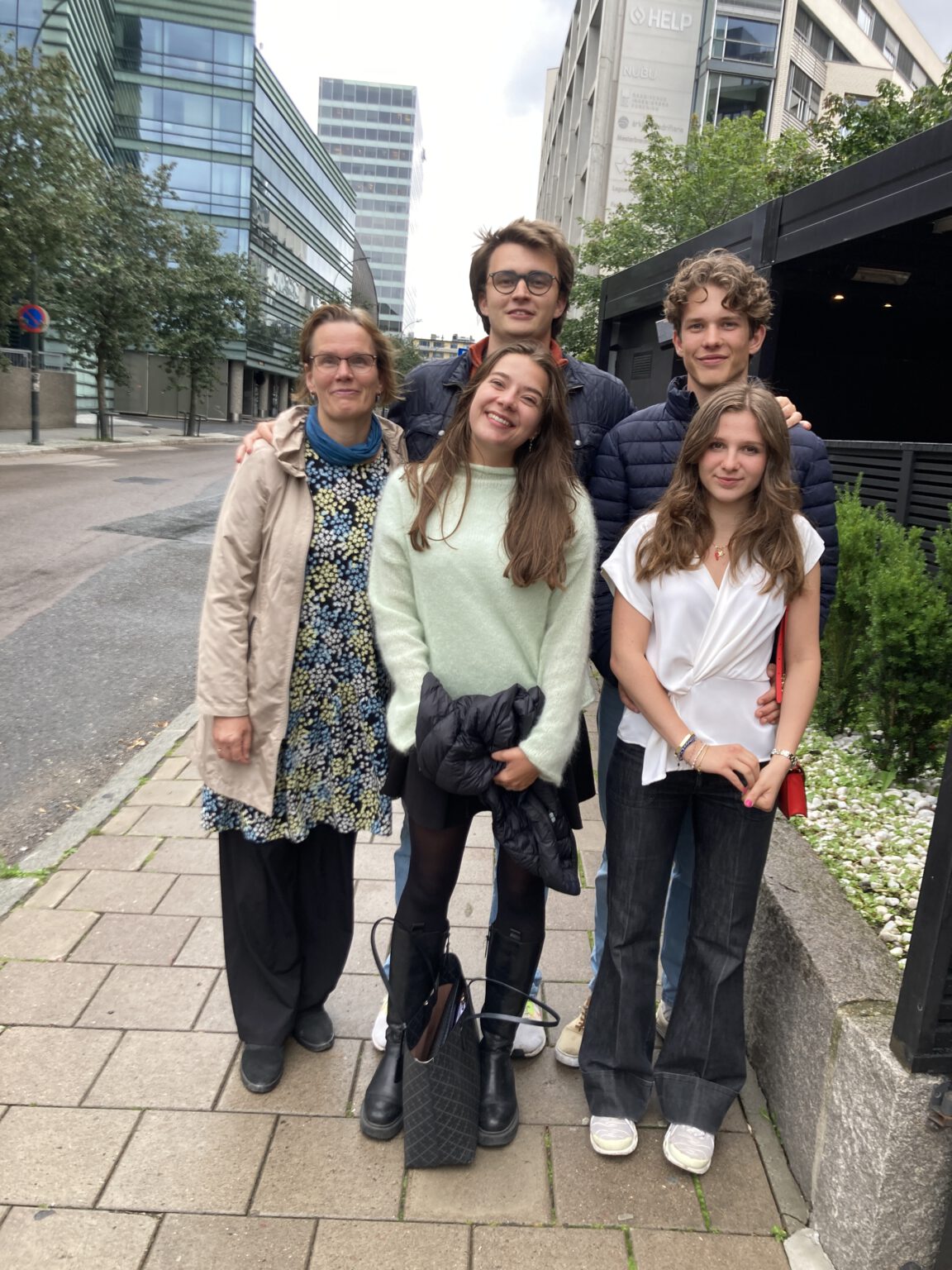
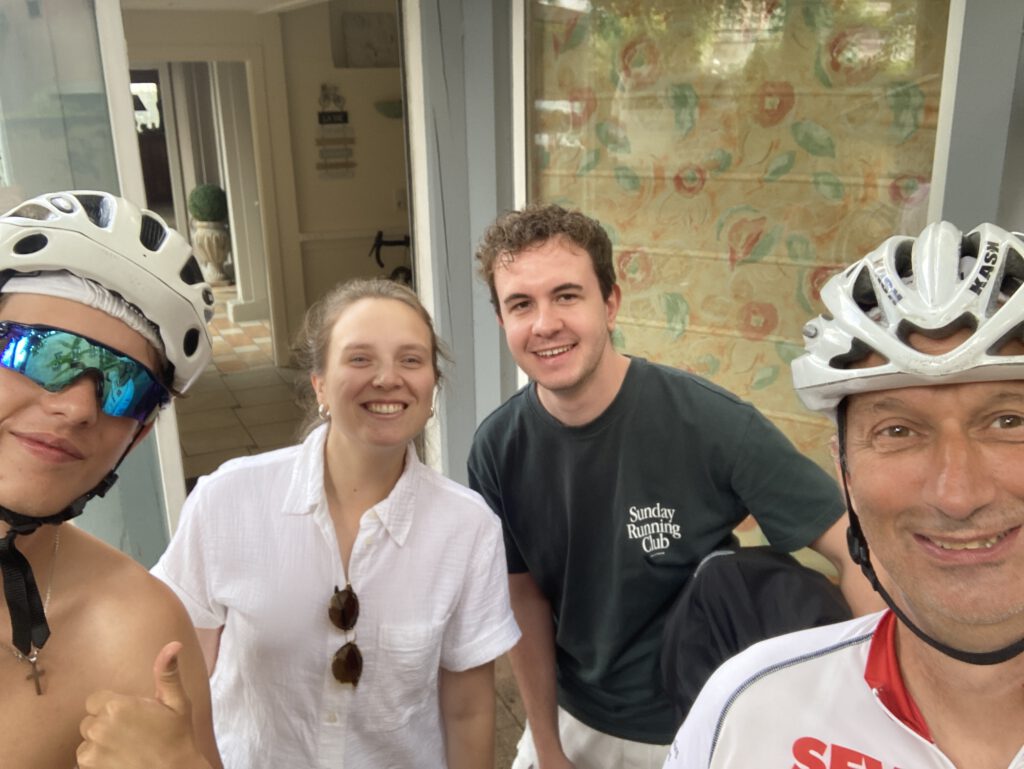
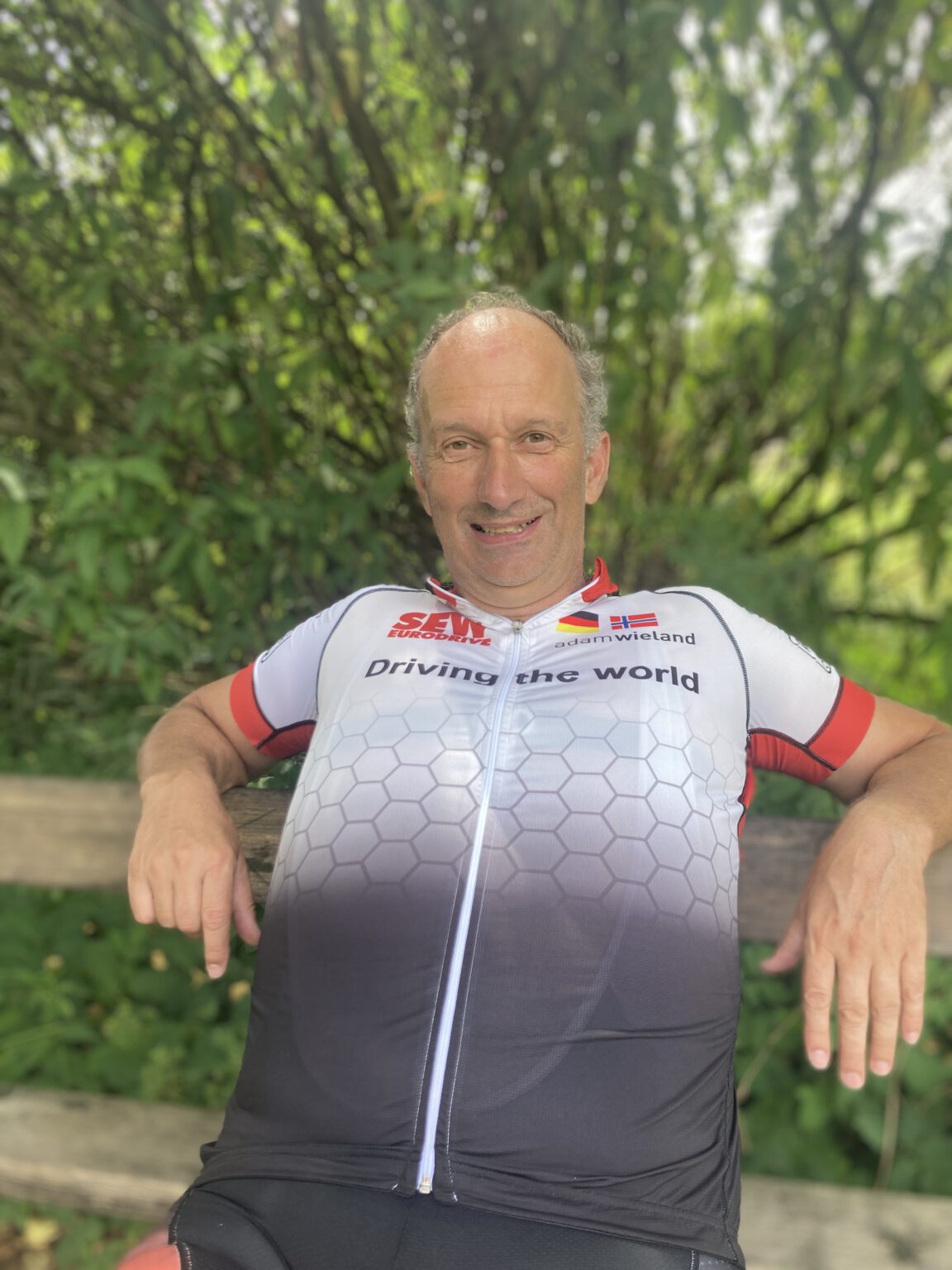
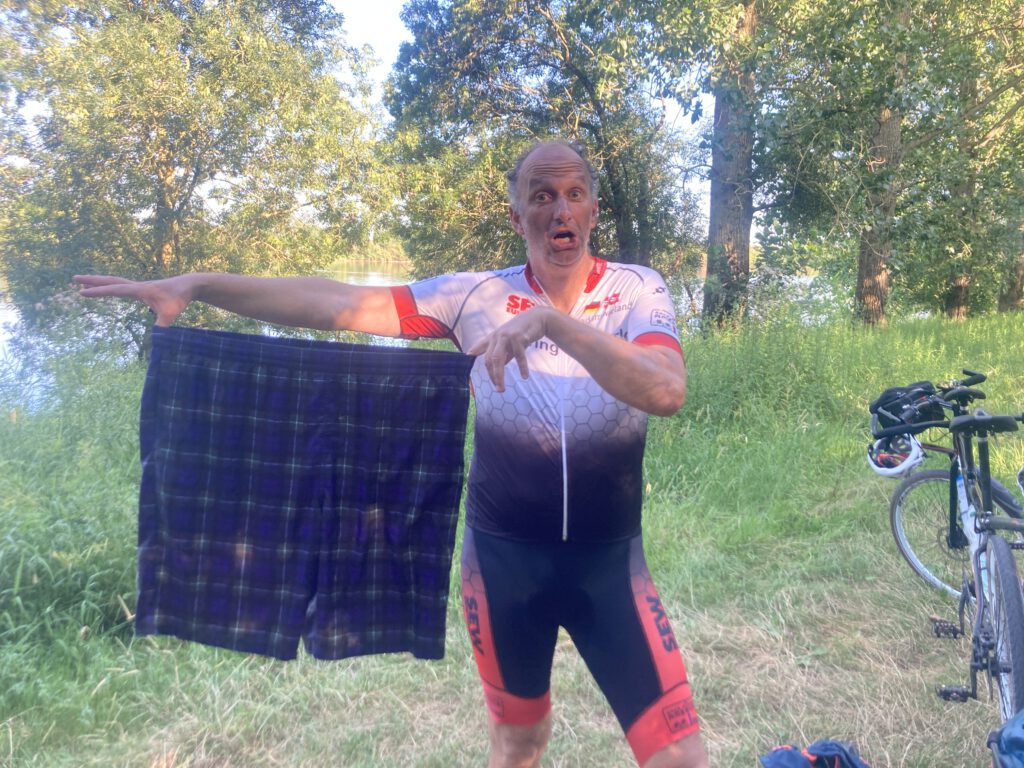
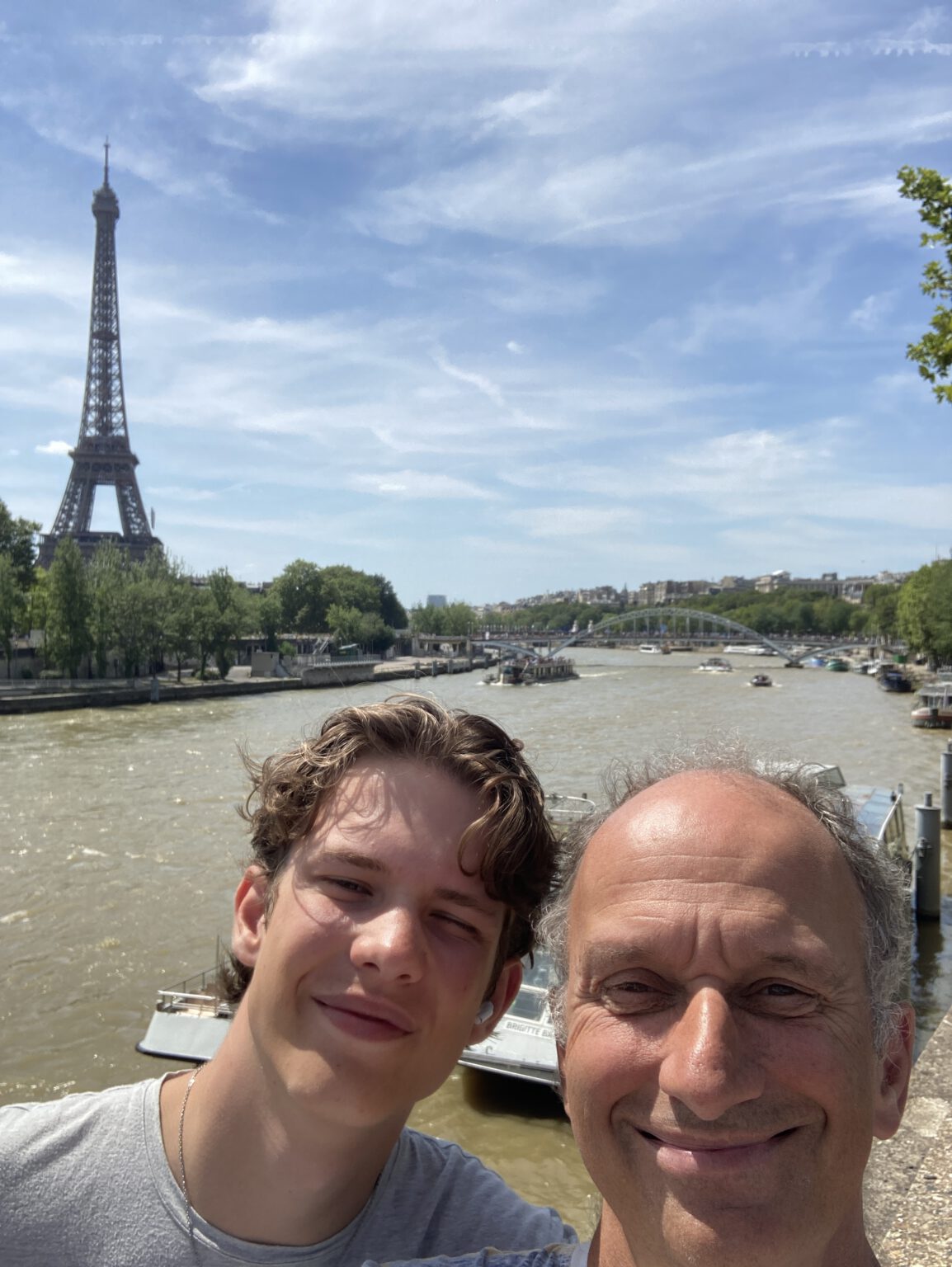
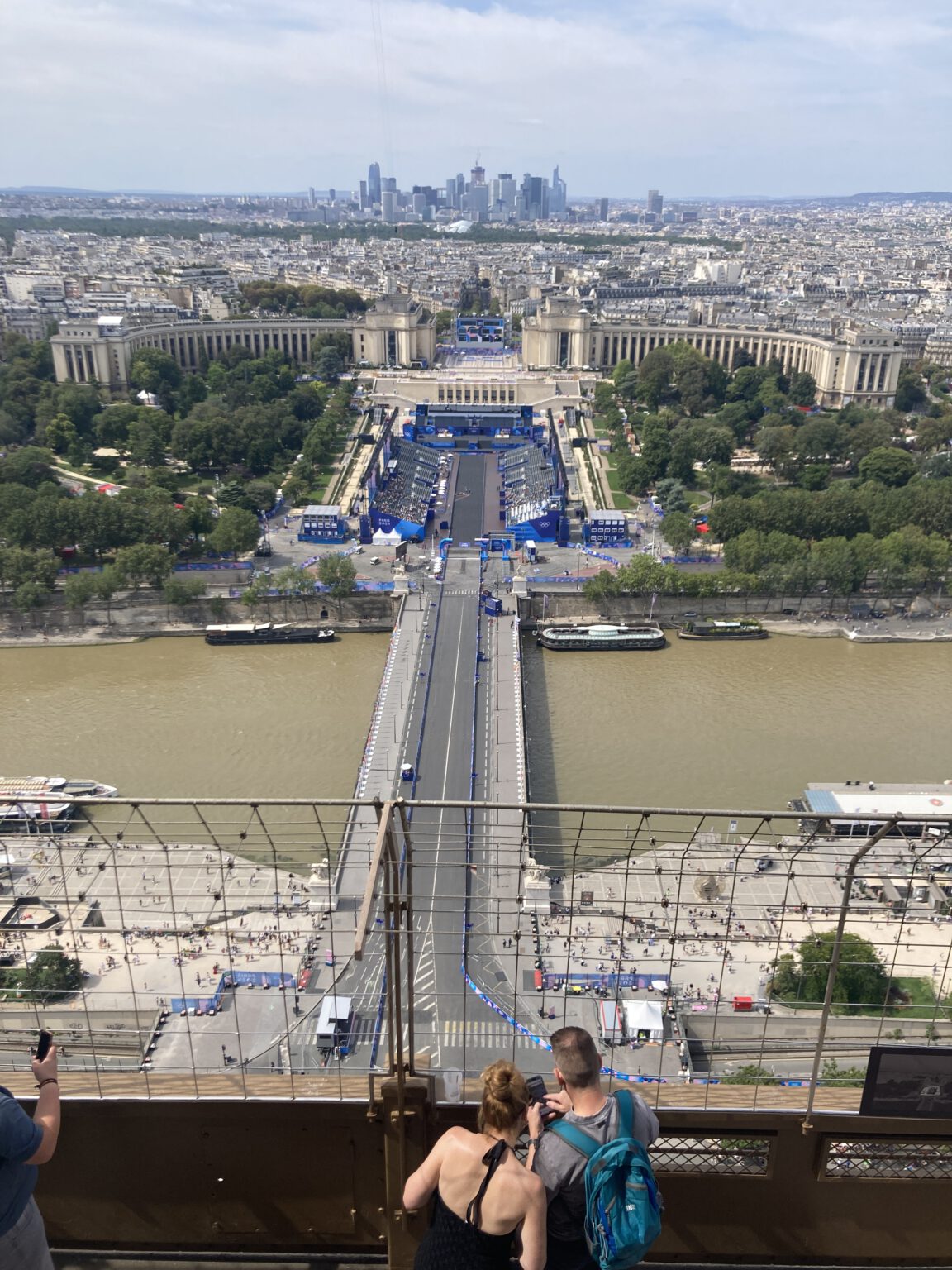
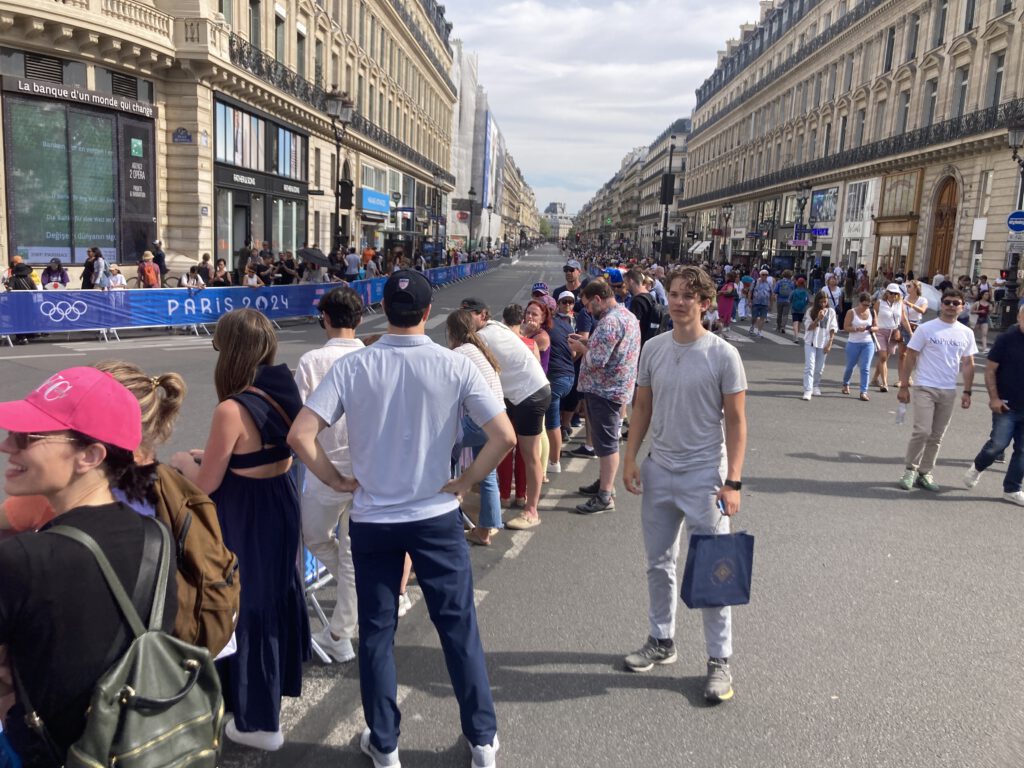
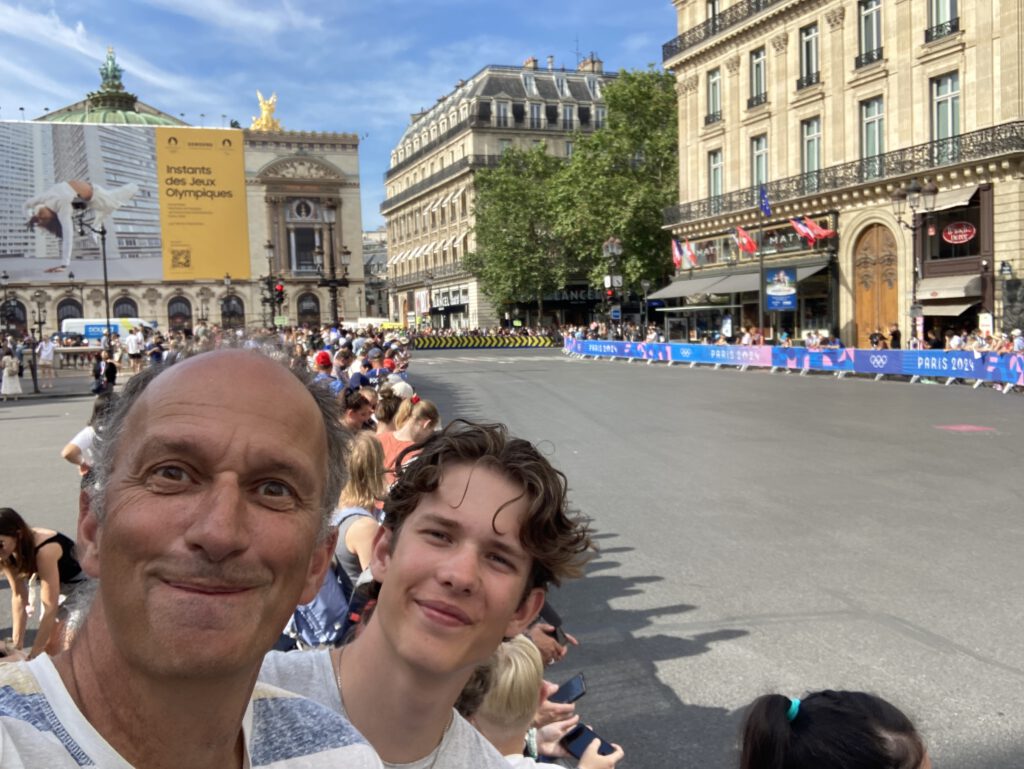
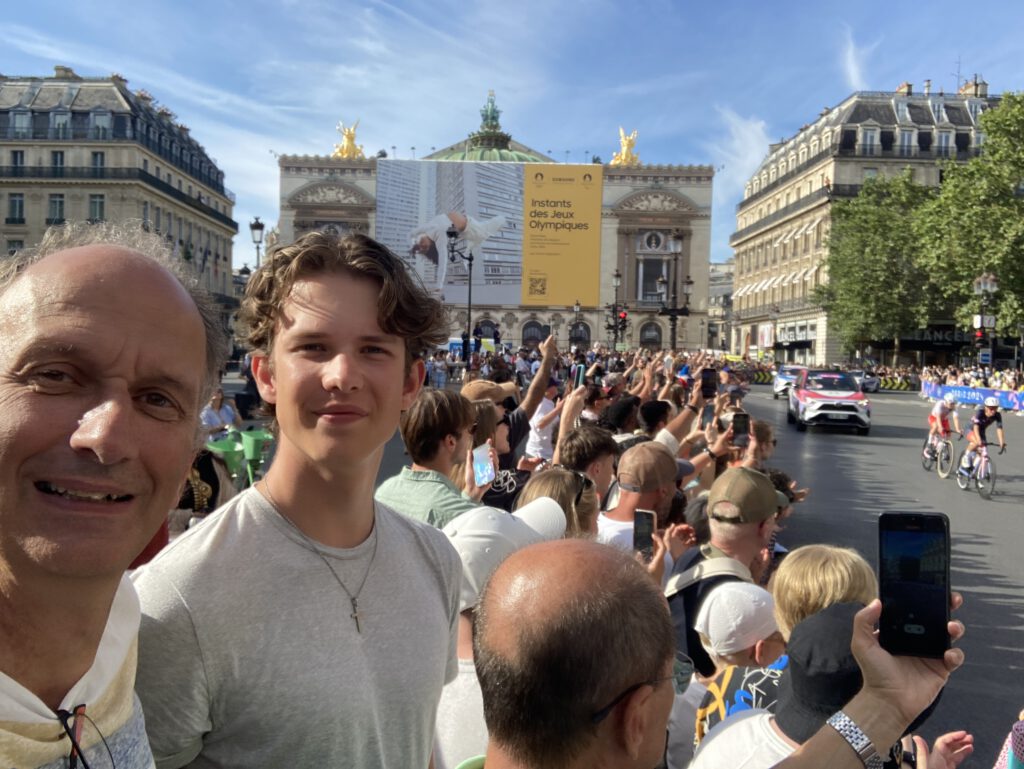
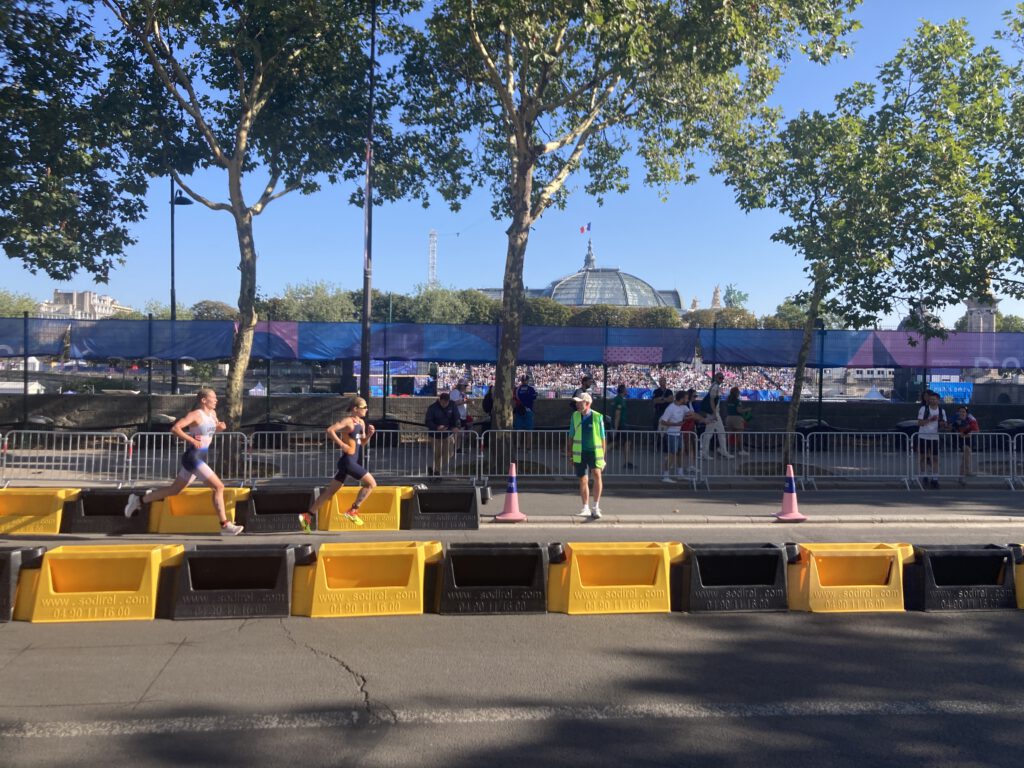
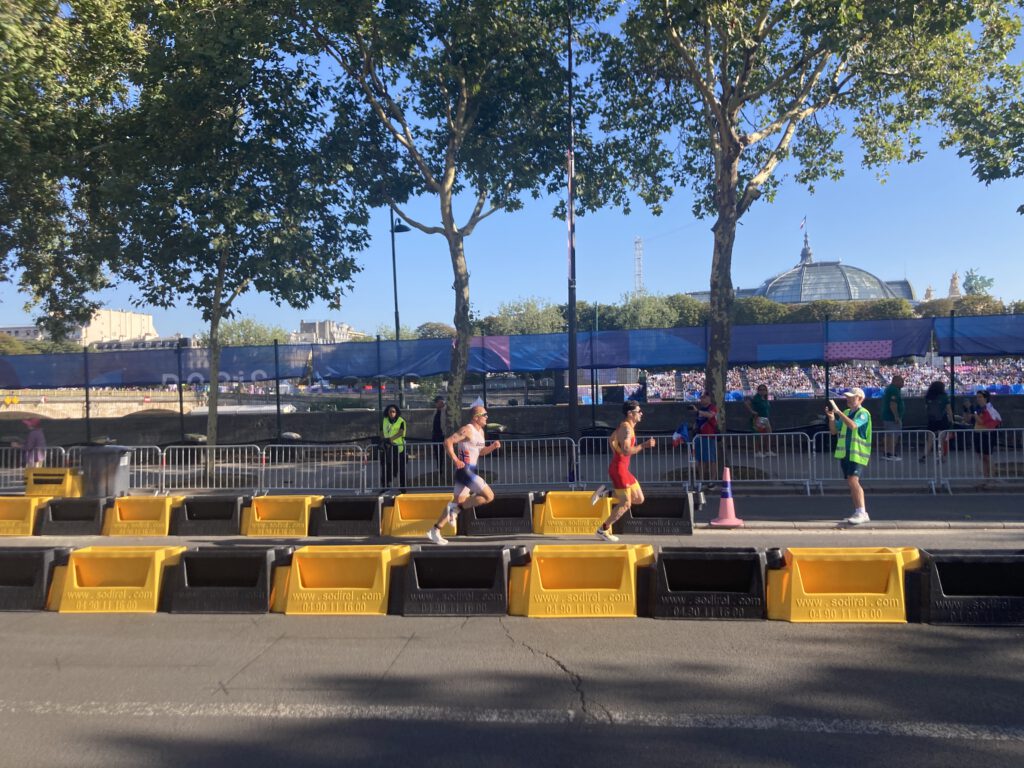
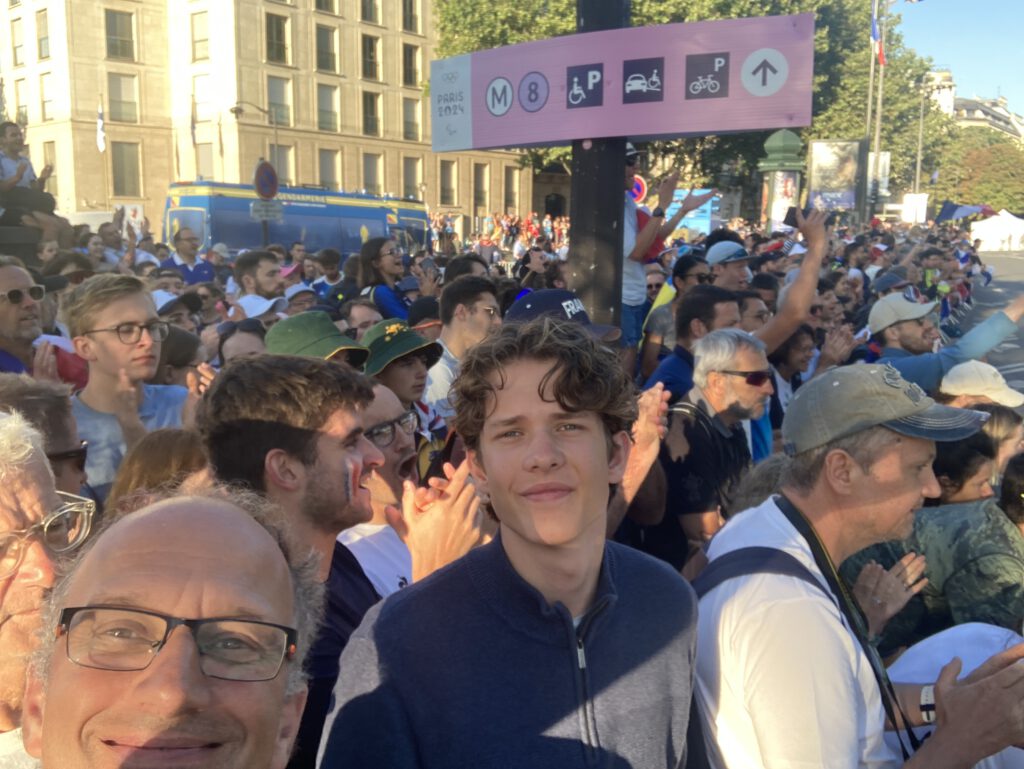
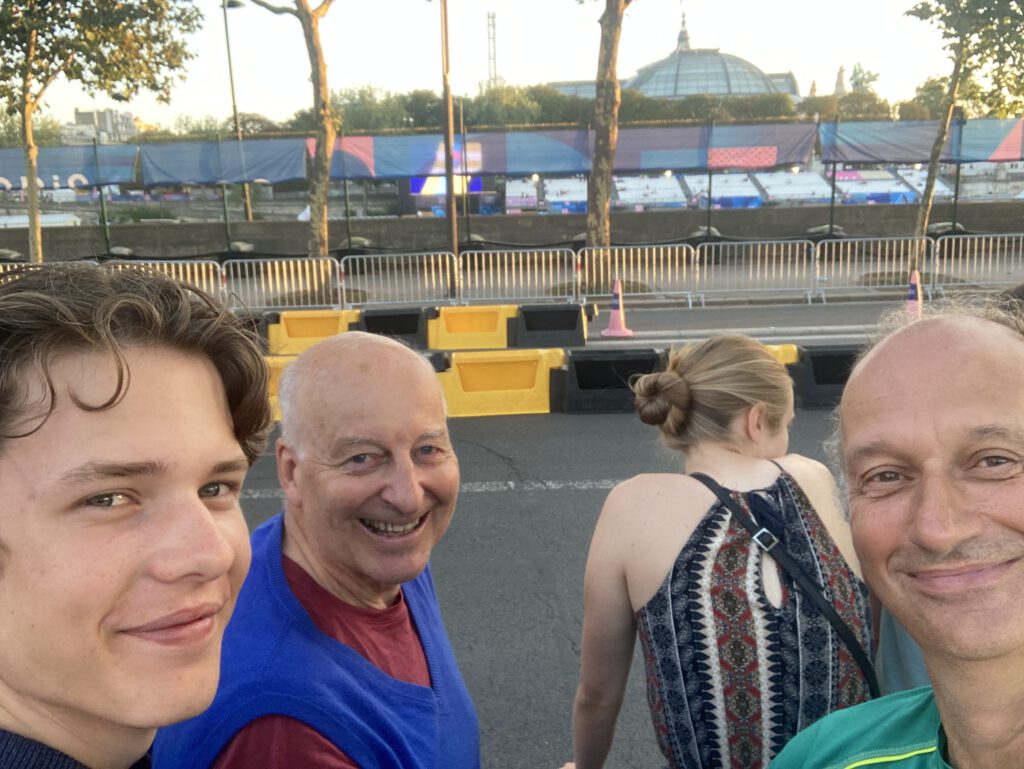
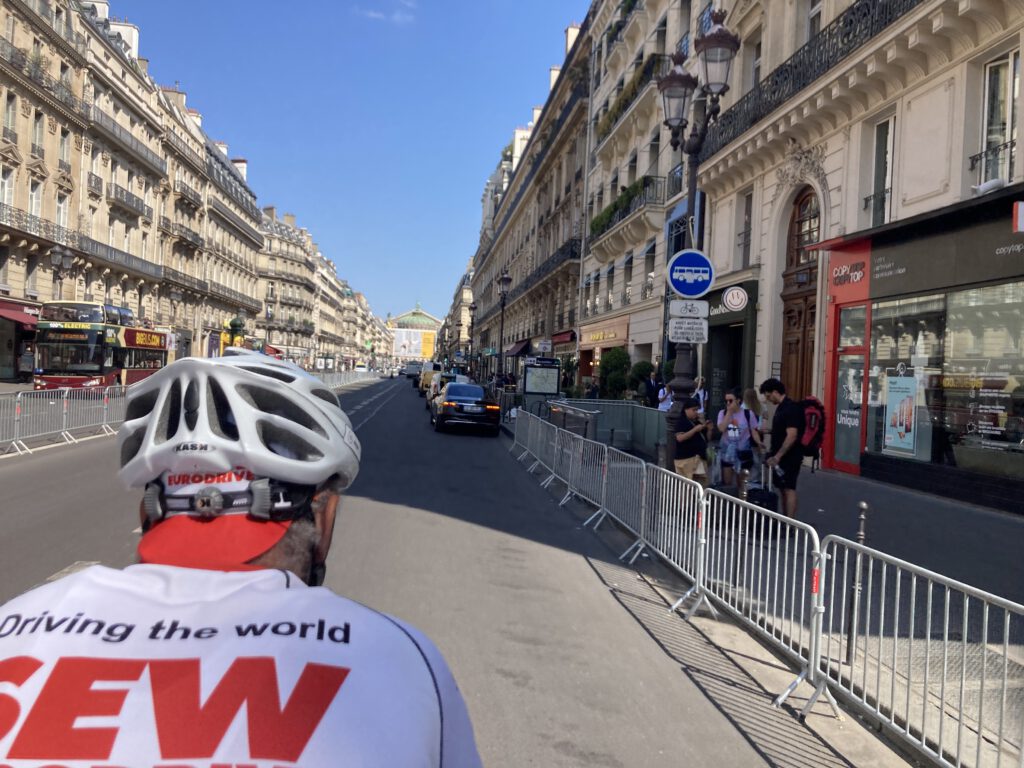
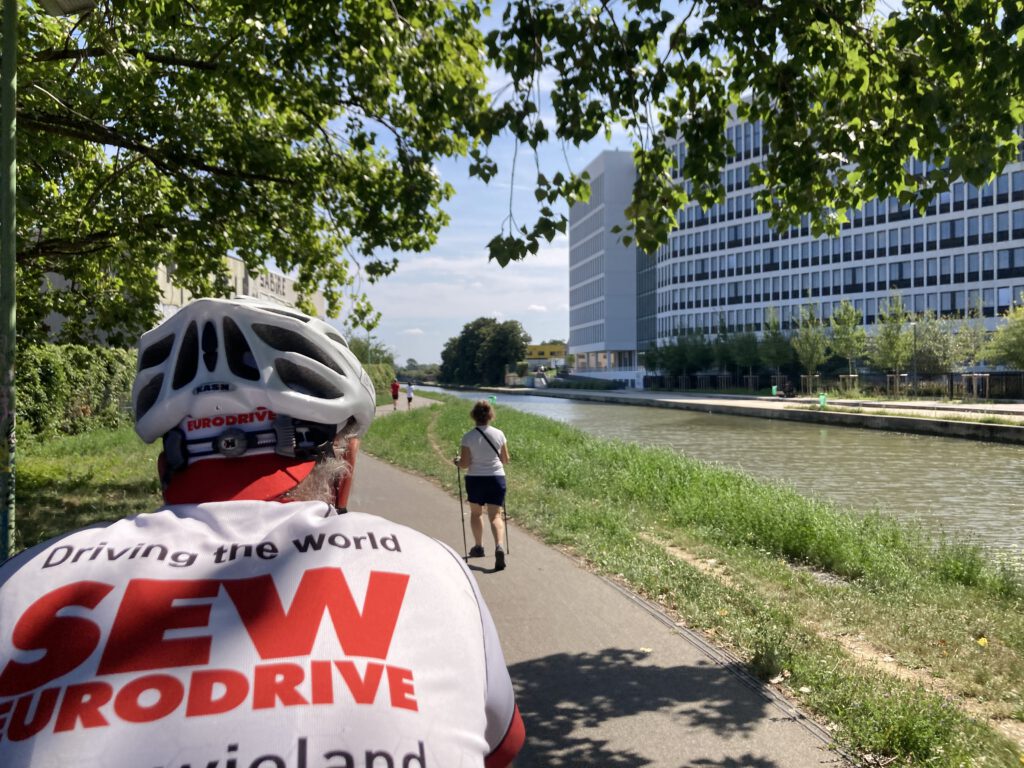
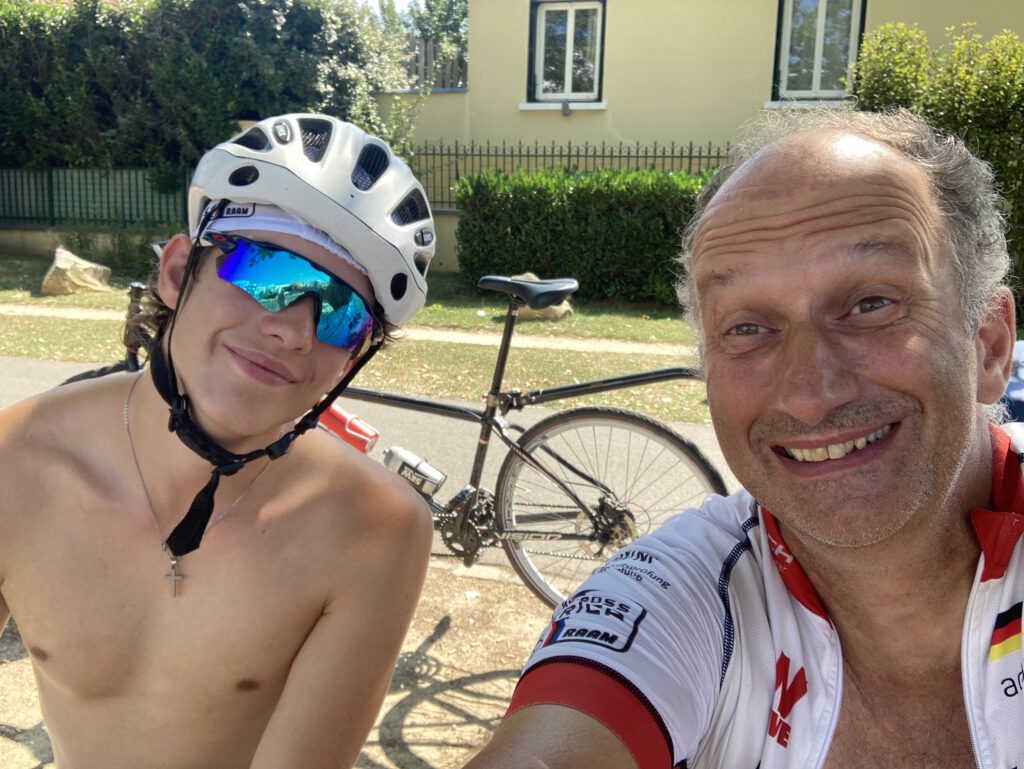
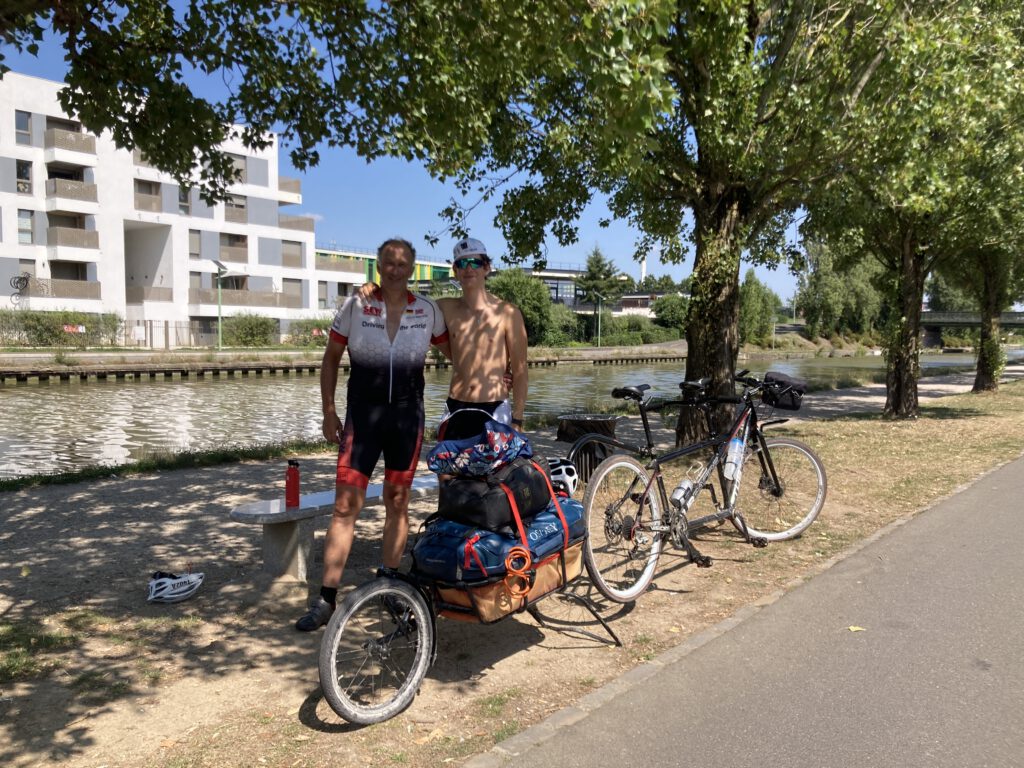
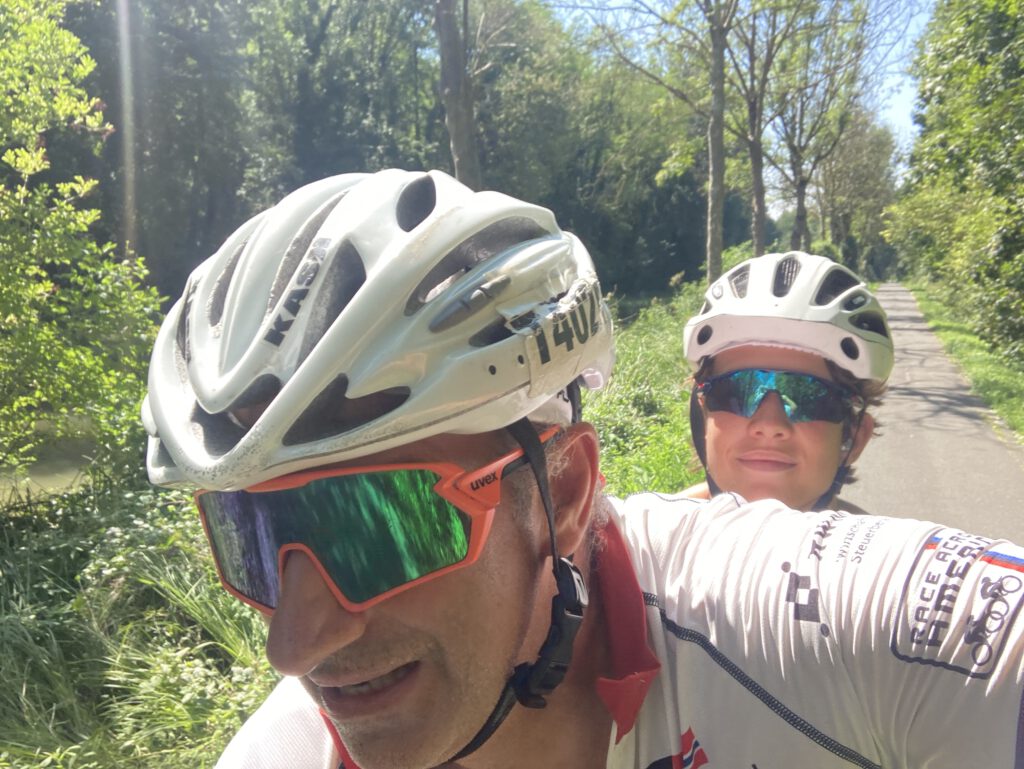
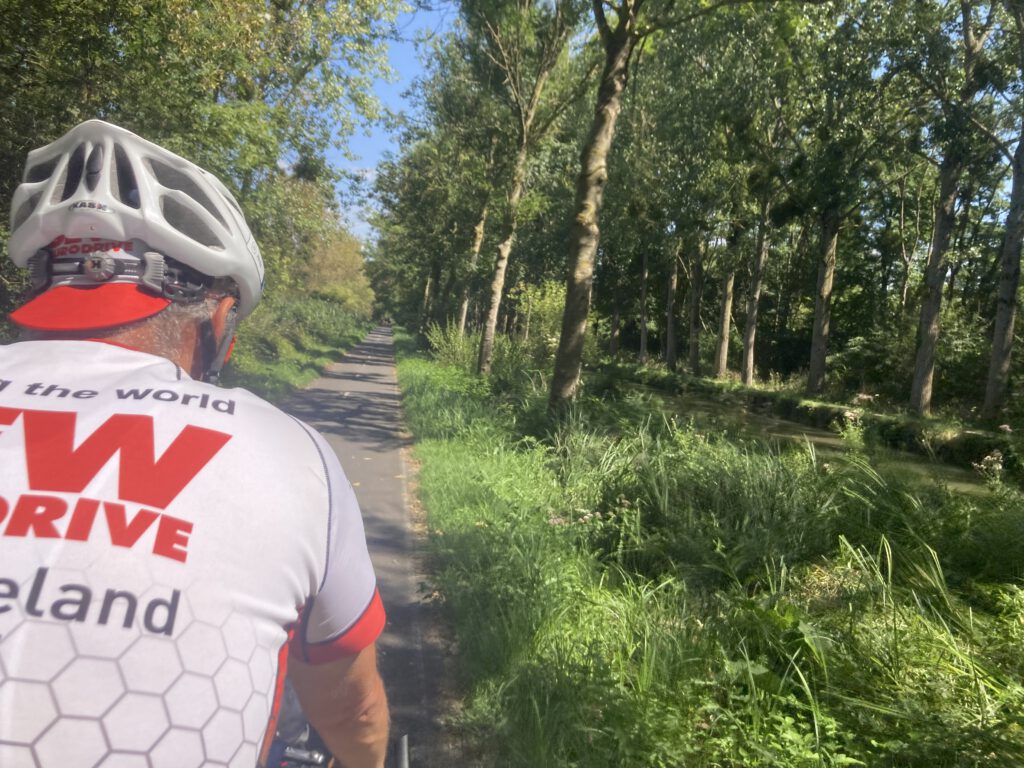
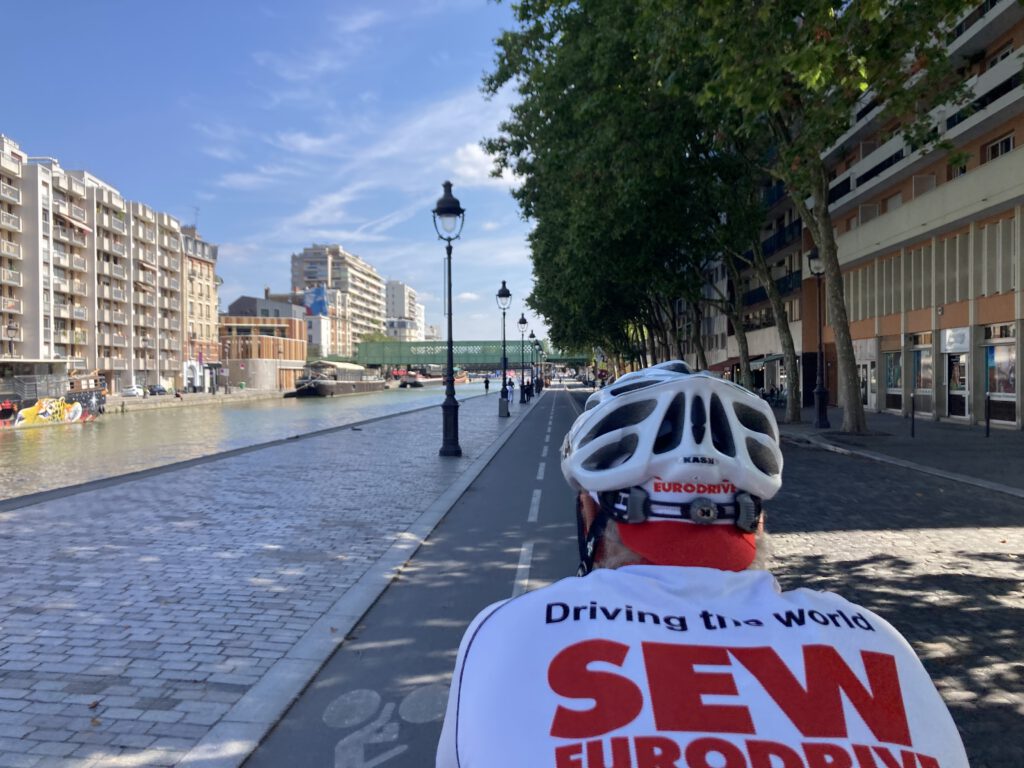
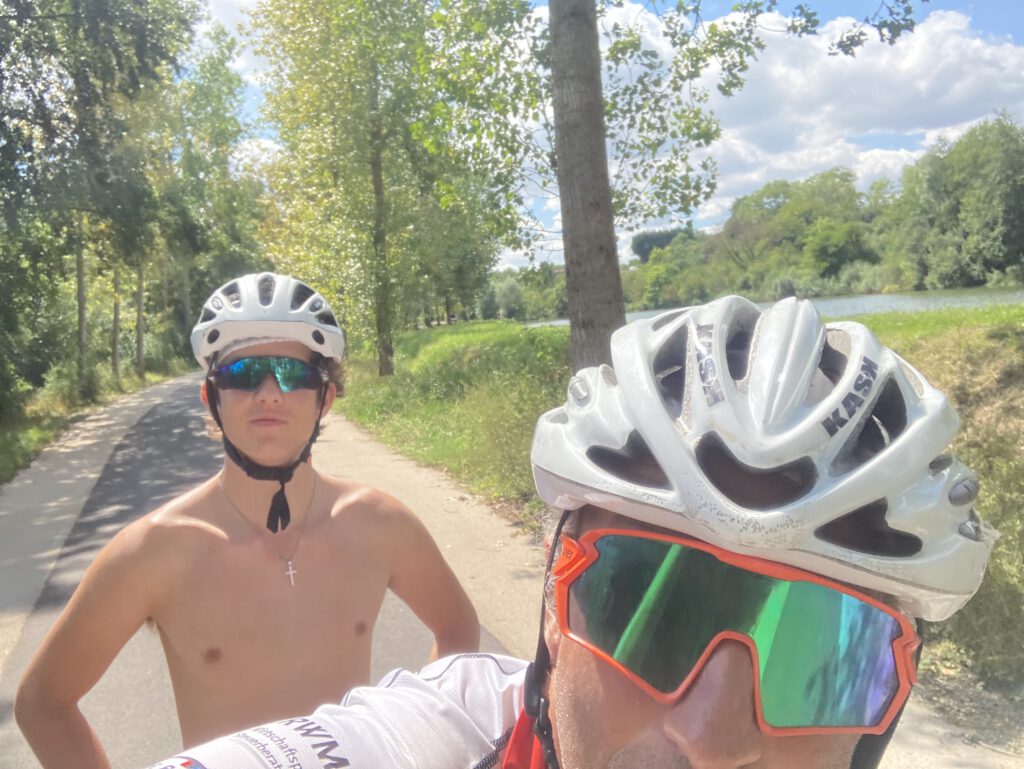
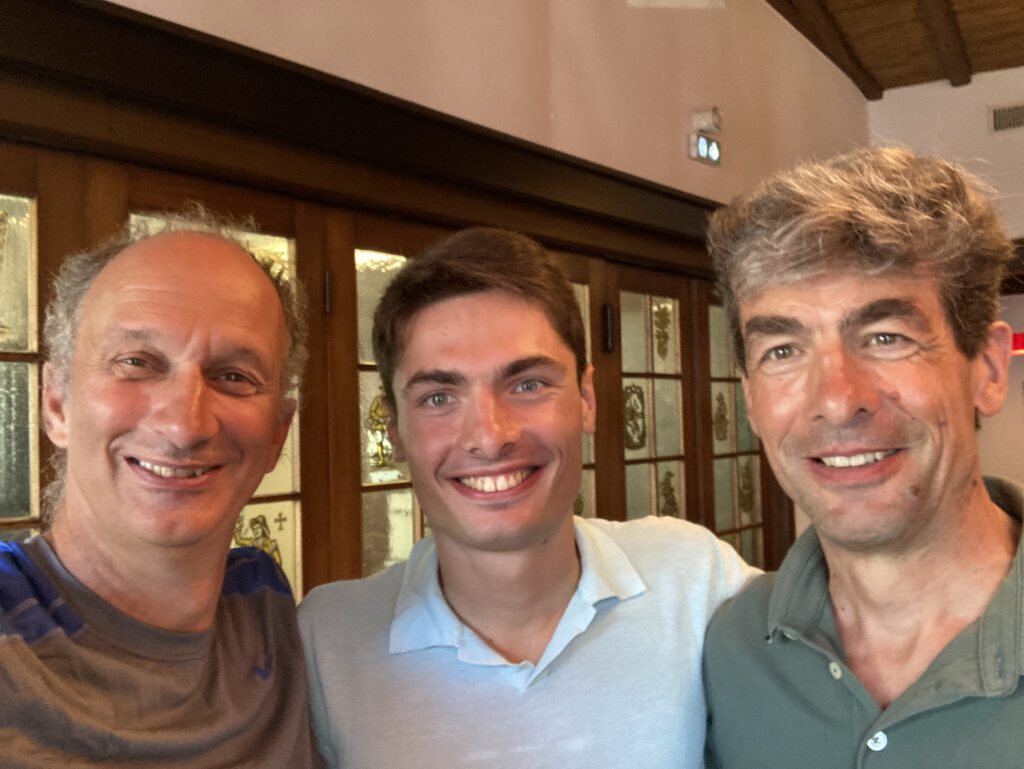
The reason we're actually in Paris is to cheer on Mikkel's cousin Solveig, who's competing for Norway in the triathlon mixed relay. The triathlon event starts at 8:00, but the spots behind the barriers along the course fill up much earlier. To have a chance of a spot in the first or second row, we get up before 6:00 and meet the rest of the cheering squad around 6:30: Solveig's grandfather – who, by the way, cycled over 1000 km from Norway/Kiel to Paris! – as well as her siblings, mother, and one of her best friends. They'd already been there since 6:00 and are standing in the front row right at the barrier fence; we're right behind them and, thanks to our height, can see well over their heads.
Gradually more and more spectators arrive, and by the time the starting gun goes off at 8:00, there are a good eight rows of people behind the barriers, and even the low wall behind them is packed with people. We can only follow the swimming leg via the big screen set up at the other end of the Seine. But the excellent live commentator (thankfully mostly in English), whom we spectators can hear clearly over the loudspeakers set up everywhere, helps us keep good track of the race.
In the triathlon mixed relay, each country fields four athletes: man, woman, man, and finally another woman. Each swims 300 m, cycles 7 km and finally runs 1.8 km before tagging the next teammate; the last one runs to the finish. The biggest favourite at this year's Games is France, who had two athletes each in the top four of both the men's and women's individual events. Great Britain and Germany also always field strong teams, while Norway is more of an outsider (if everything goes perfectly, there might be talk of bronze).
The gun goes off and 17 athletes plunge into the Seine. Ahead of the Olympics, the river underwent an elaborate water-treatment upgrade to make it 'swimmable' in terms of water quality. Even so, there were repeated problems, especially after rainfall. Training sessions were cancelled and the men's event had to be postponed. The Belgian team doesn't compete at all, since one of their triathletes is being treated in hospital for an E. coli infection, presumably contracted during the individual race a few days earlier.
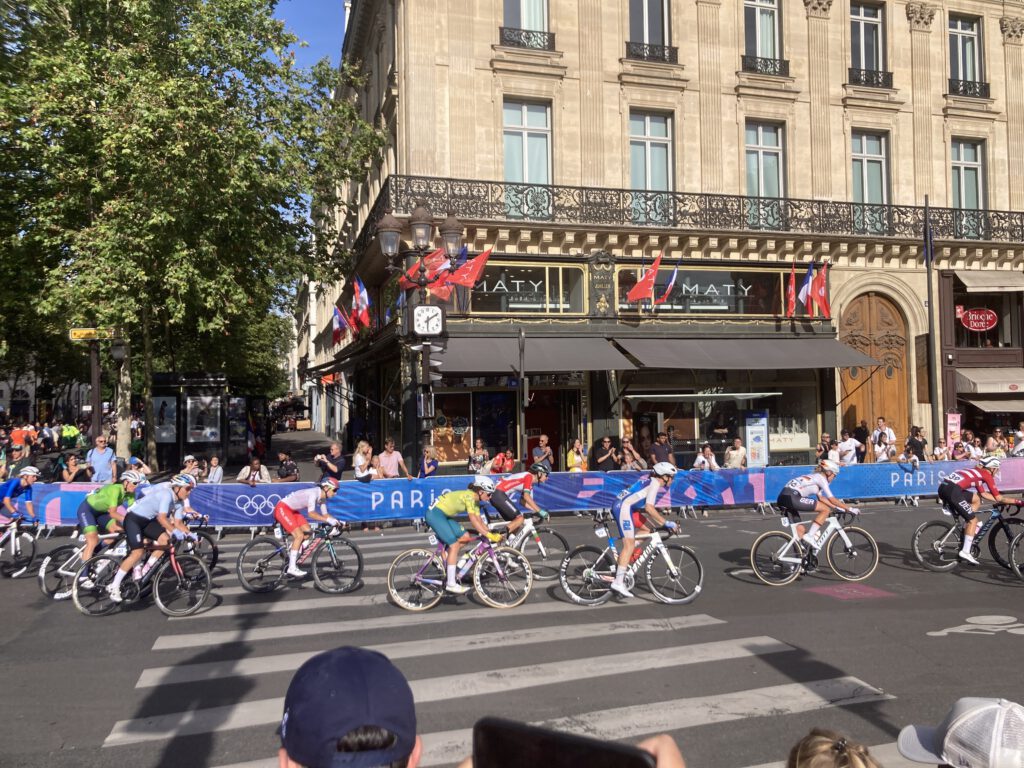
After the swim, the triathletes head out onto the 7 km bike leg, made up of two 3.5 km laps, in a fairly tight group. Unfortunately the French cyclist crashes quite early in the race and then has trouble getting the dropped chain back on, costing him a lot of time and dropping him to the back. That's a tough blow for the presumed favourites, even with such a strong team.
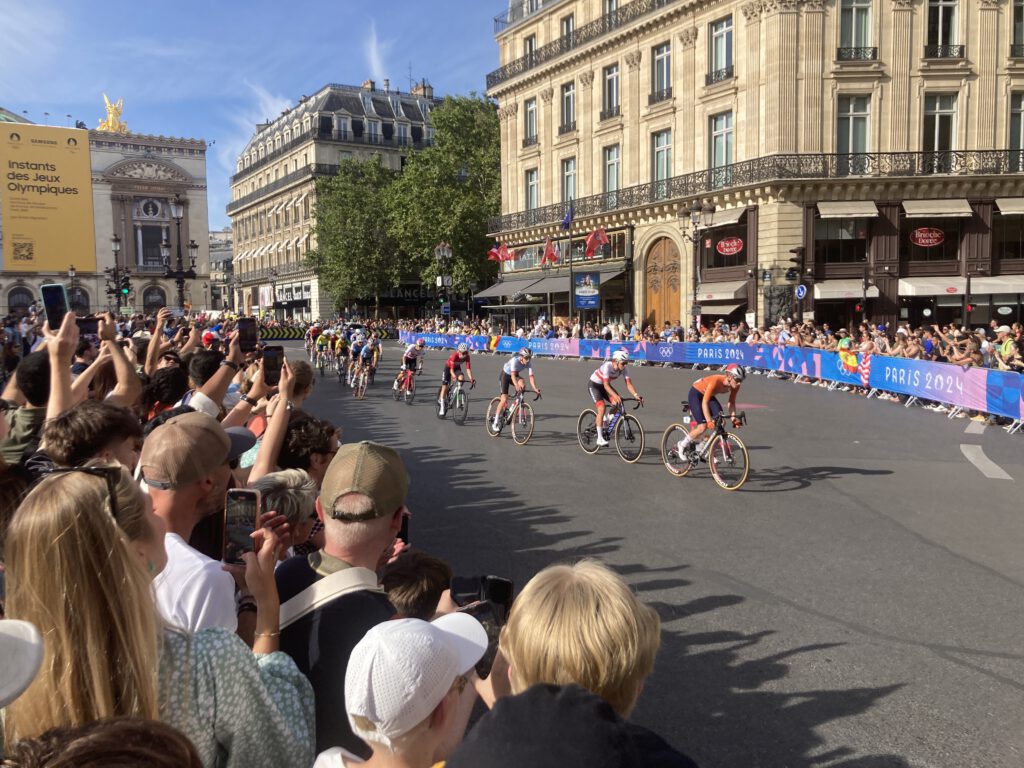
Even after the first run, the field is still fairly tightly bunched, but then gradually spreads out. Great Britain and Germany, running together, take the lead. For Norway, Lotte Miller swims, cycles and runs, before handing over to Kristian Blummenfelt. Kristian won individual gold in Tokyo three years ago and has been a national hero in Norway ever since. He runs strongly, but it gradually becomes clear that a medal isn't in the cards for Norway this year. At the front of the field, Germany and Great Britain continue running side by side. France, meanwhile, has fought its way up into the front midfield, and every time a French athlete cycles or runs past, the crowd cheers especially loudly – but will it be enough in the end?
Solveig now goes into the water as Norway's final athlete. Swimming is her weakest of the three disciplines. Even though it's only 300 m, the Seine's currents don't exactly offer ideal conditions.
The duel at the front turns into a three-way battle after the American triathlete manages to catch up with Germany and Great Britain during the bike leg. These three women also pass right in front of us together one last time, before turning off towards the finishing straight about 100 m further on. We have to follow the final sprint via the big screen and loudspeakers, but gold goes to Germany. Congratulations on a fantastic performance. For Solveig, in the end it's more about a solid finish – the Norwegians finish 11th. For us it was still a real highlight, getting to cheer on a family member at the Olympics, and for the triathletes the fantastic atmosphere along the course was surely a once-in-a-lifetime experience.
After the race, all the spectators stream away from the course, and we stay sitting in the shade for quite a while as the crowd gradually thins out. That way we get to witness the medal ceremony, complete with the German national anthem – for me, the first time experiencing that live, essentially 'in the stadium' of Paris. Brilliant.
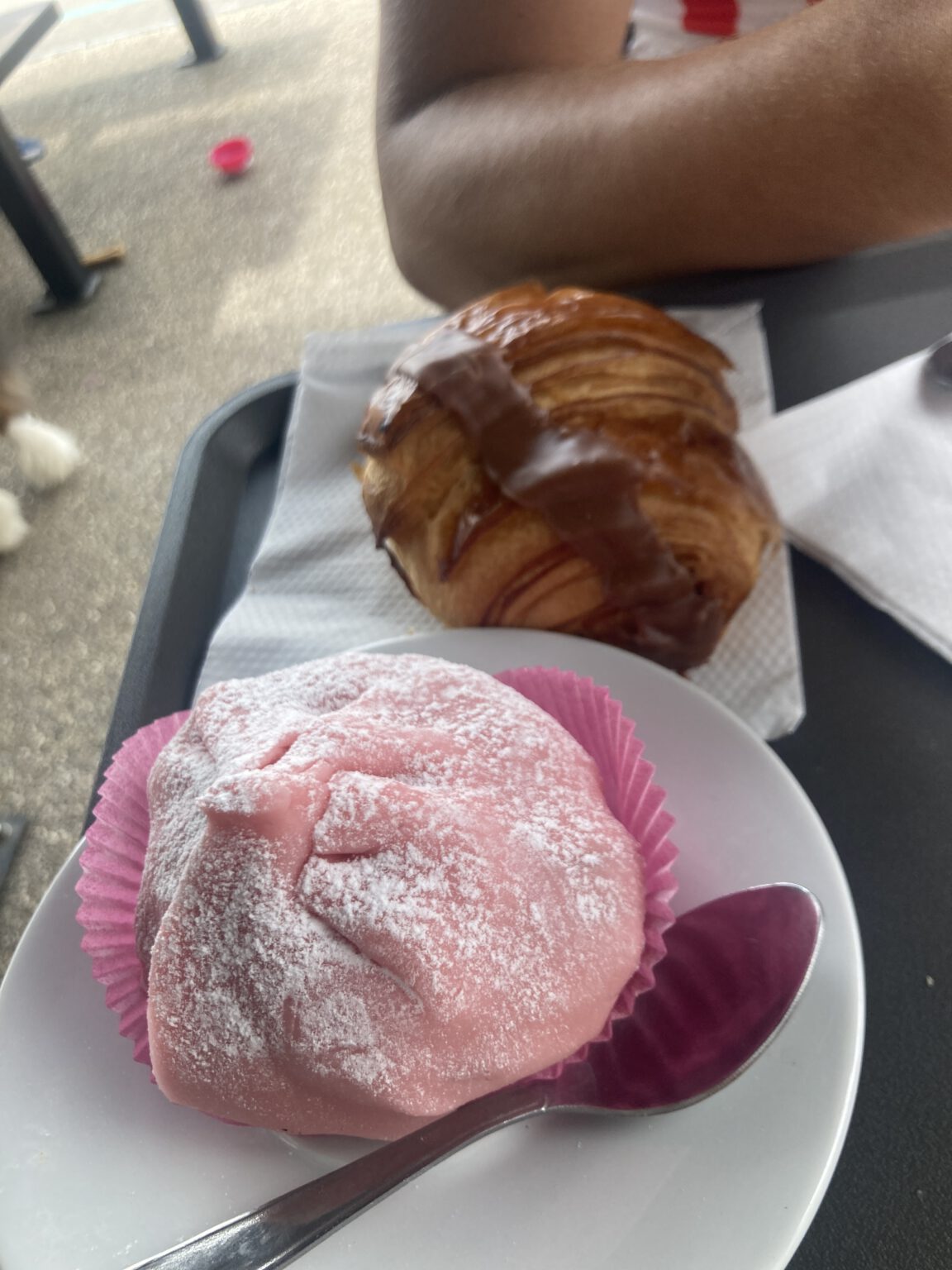
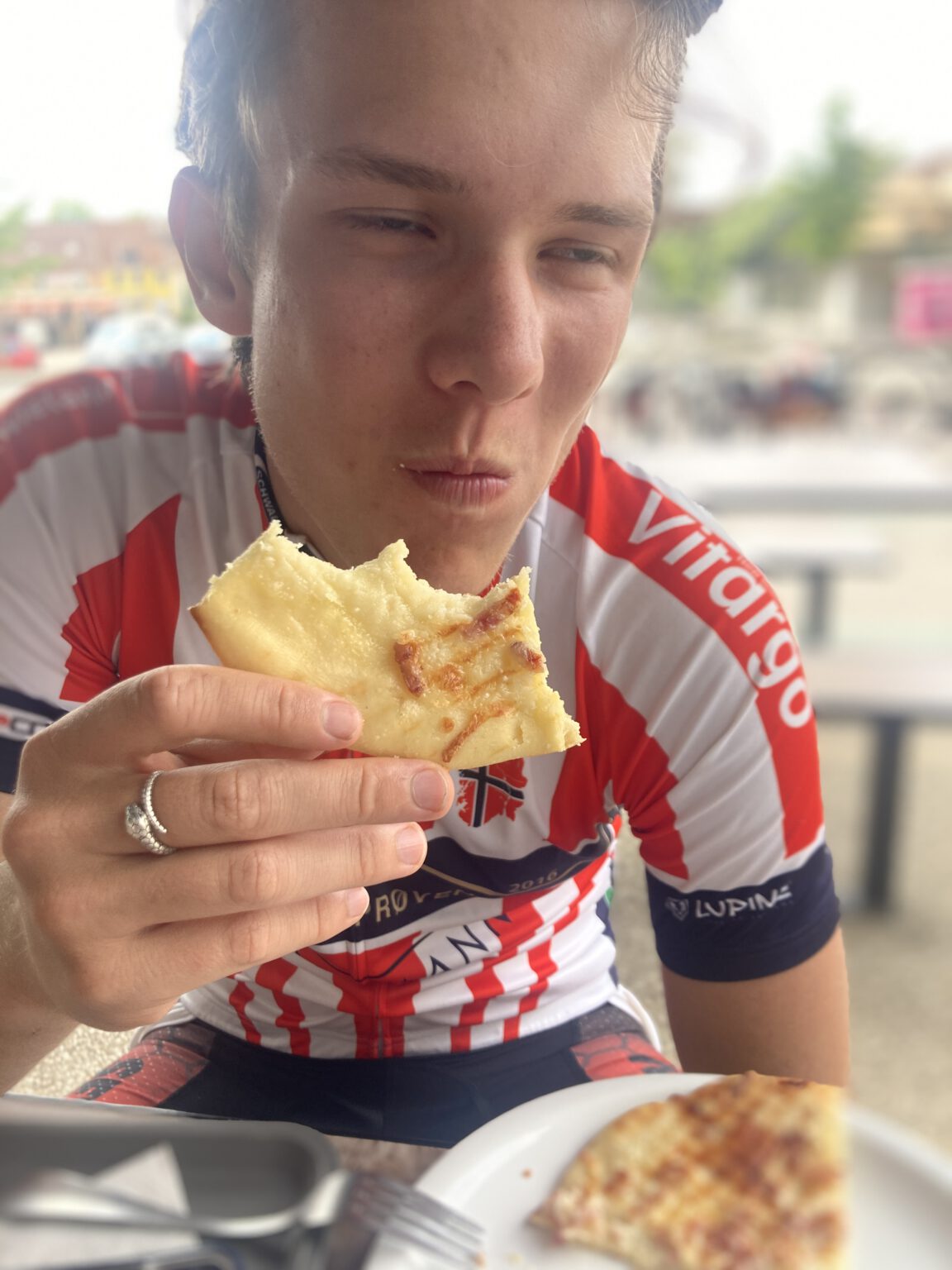
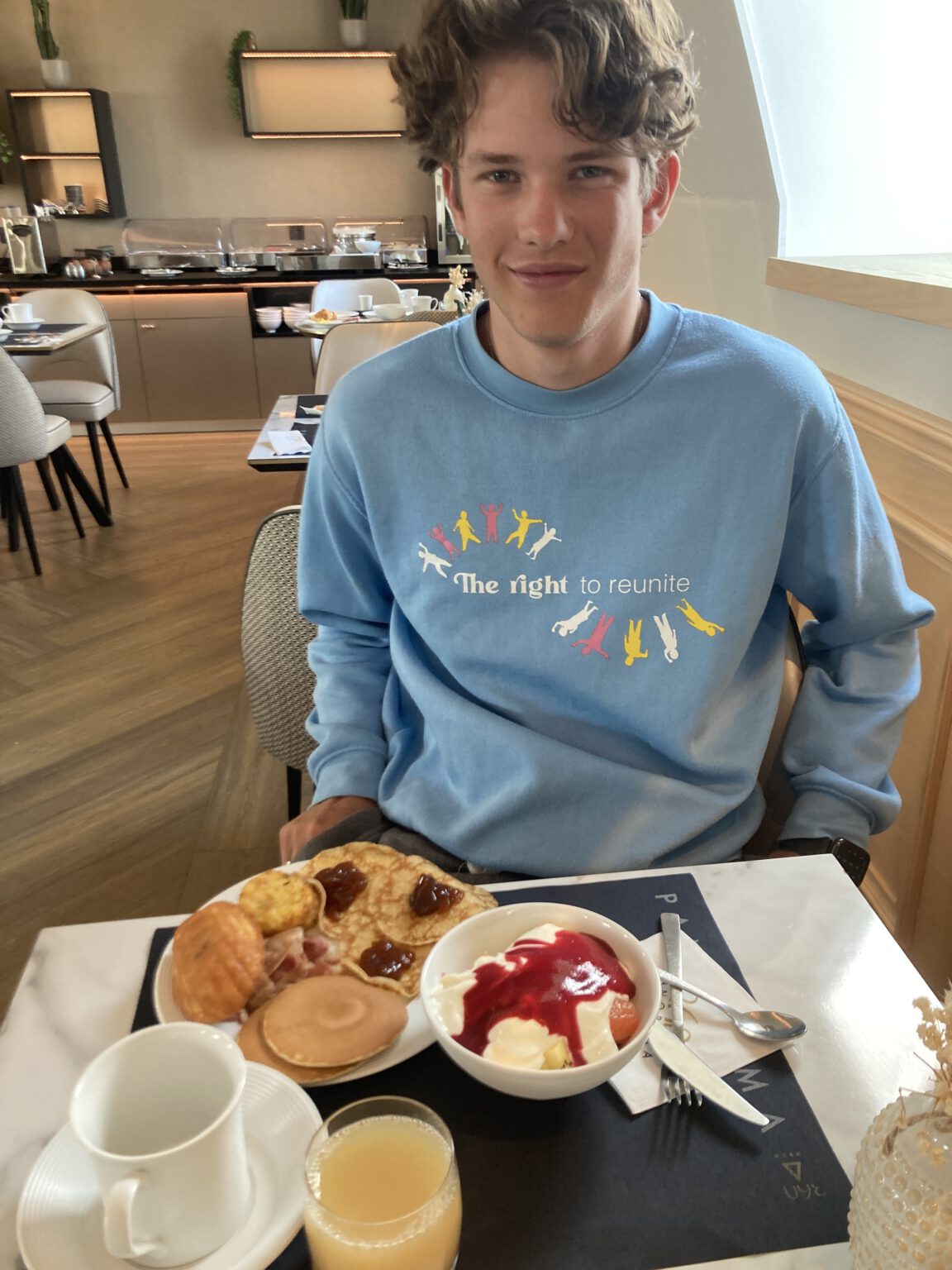
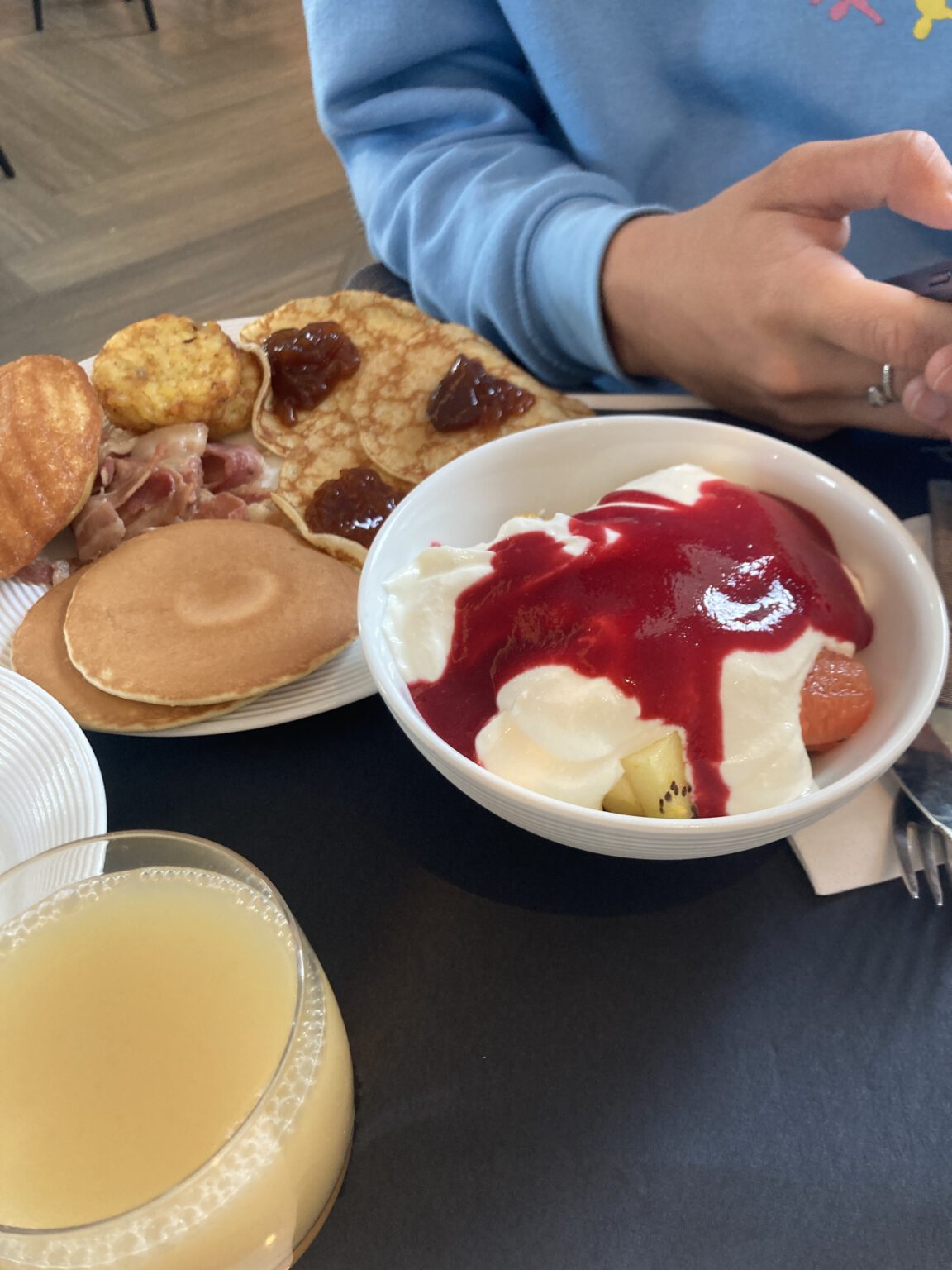
We ride back to the hotel, stopping at a café along the way for breakfast (the usual early breakfast didn't happen today, since we set off so early). Afterwards we catch up on both sleep and blogging.
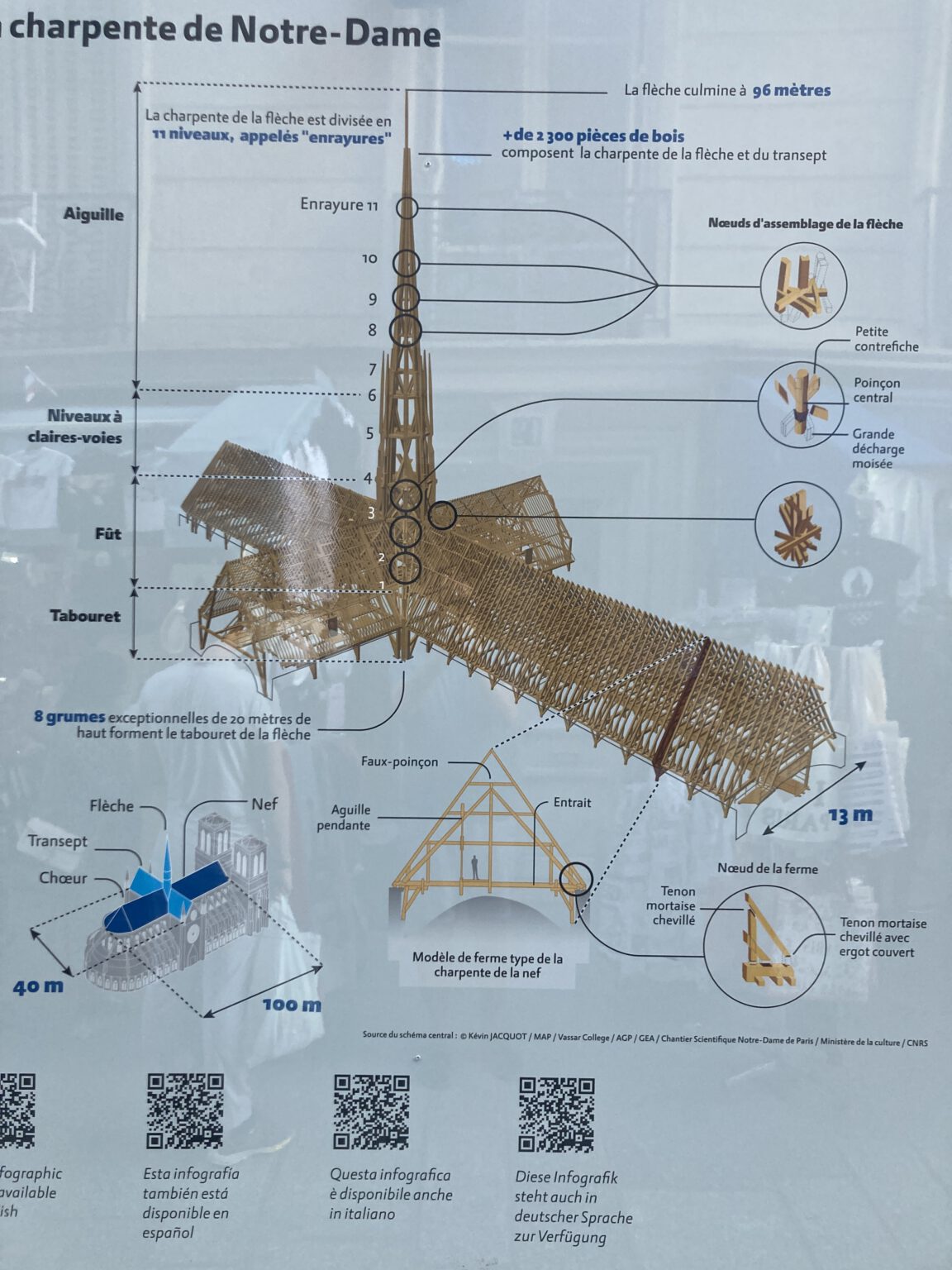
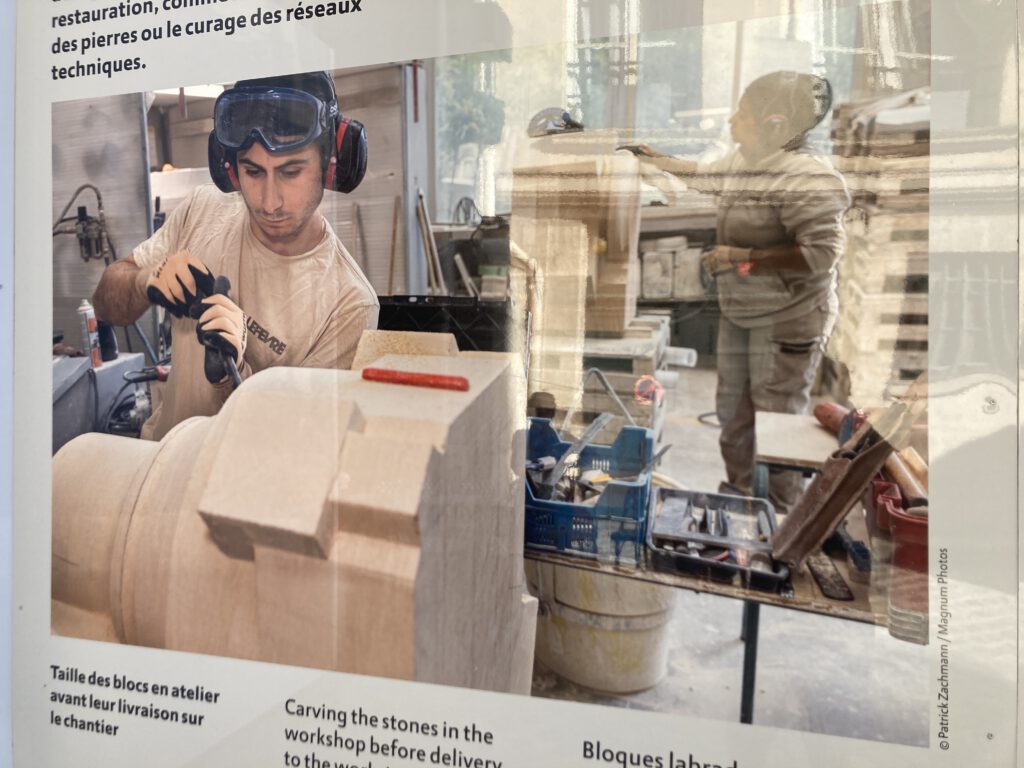
In the afternoon and evening we want to swing by Notre-Dame, before rounding off our last evening in Paris on Montmartre. Notre-Dame was badly damaged by a fire five years ago and is currently being extensively rebuilt. On the construction fence surrounding the site there's a great display documenting the individual craftsmen involved in the work. The cathedral is due to reopen in December 2024, five years after the fire. It's hard to believe, seeing the extent of the damage the fire caused, and considering that it took almost 200 years to build the structure back in the mid-12th century.
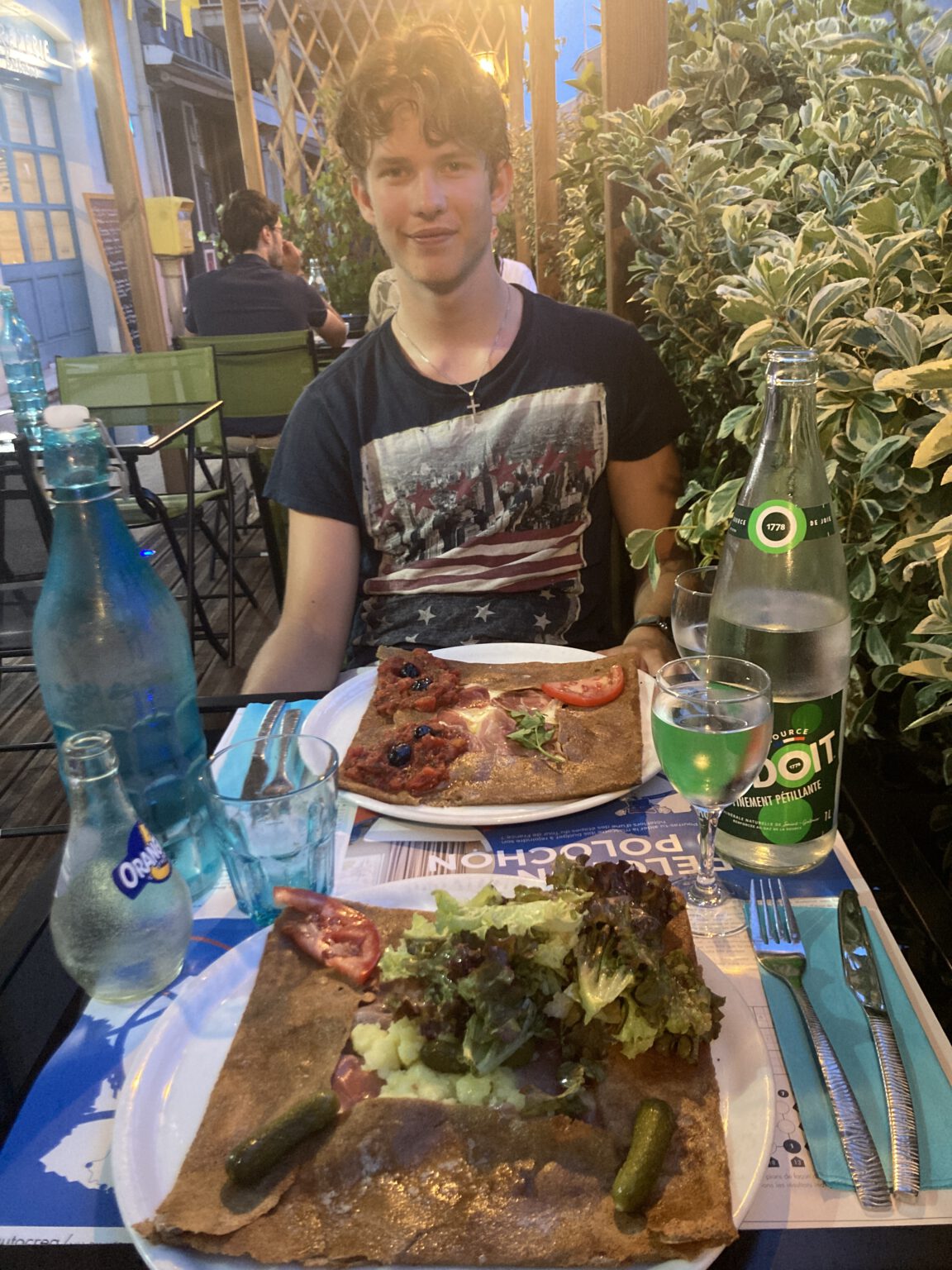
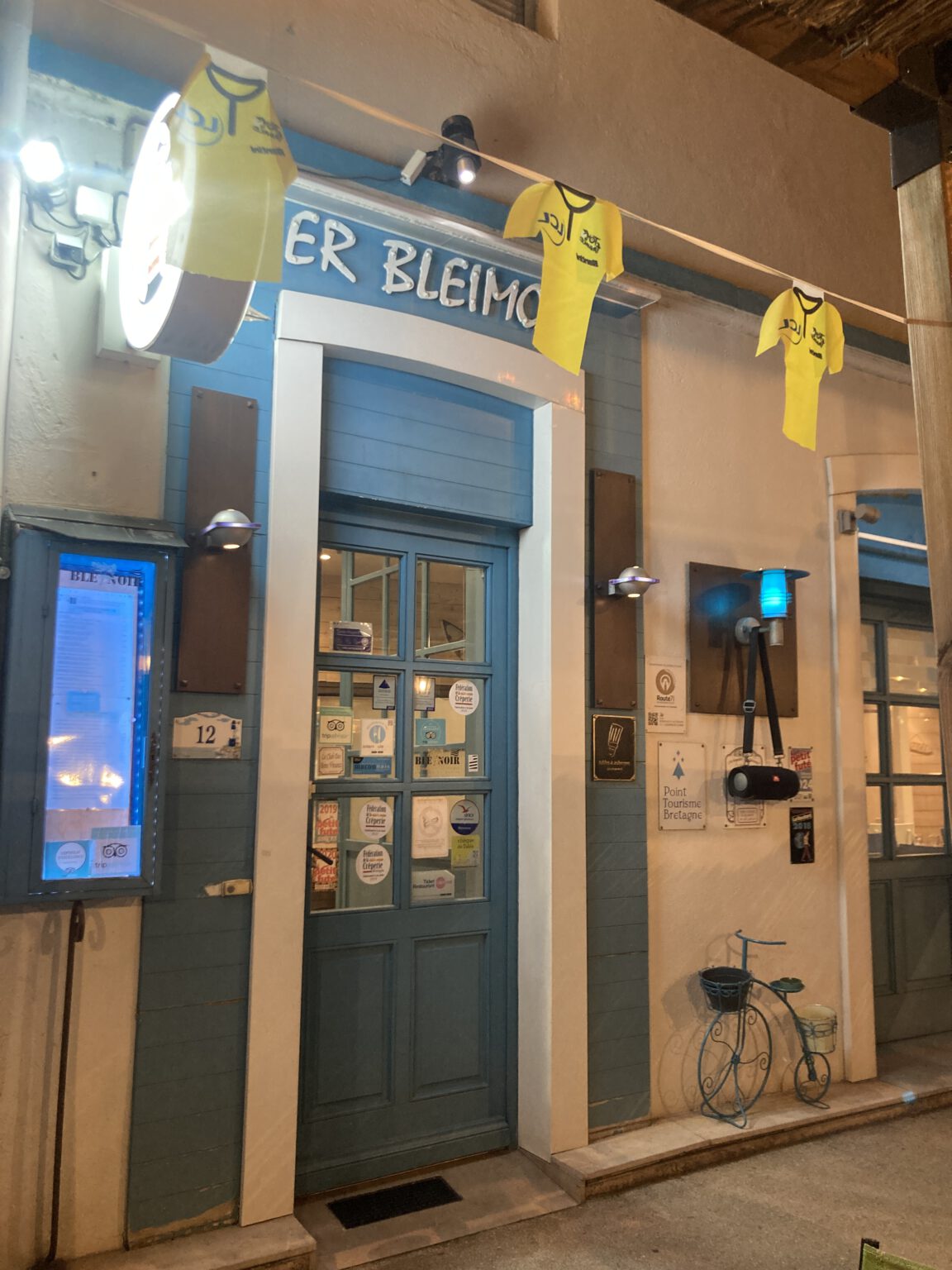
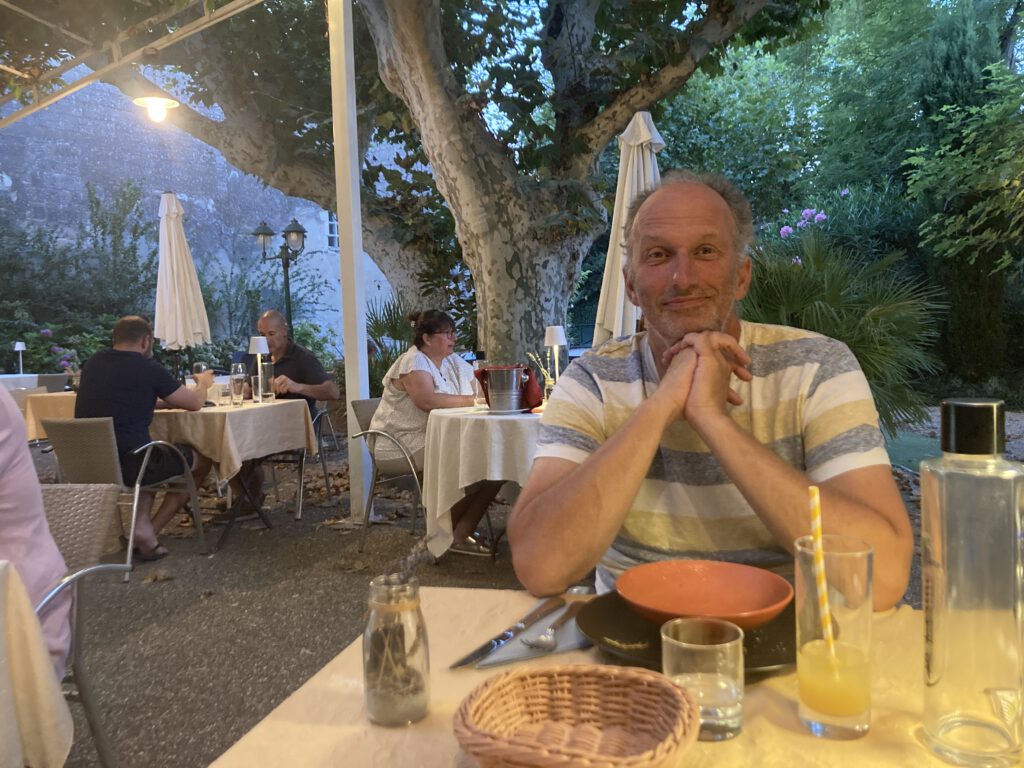
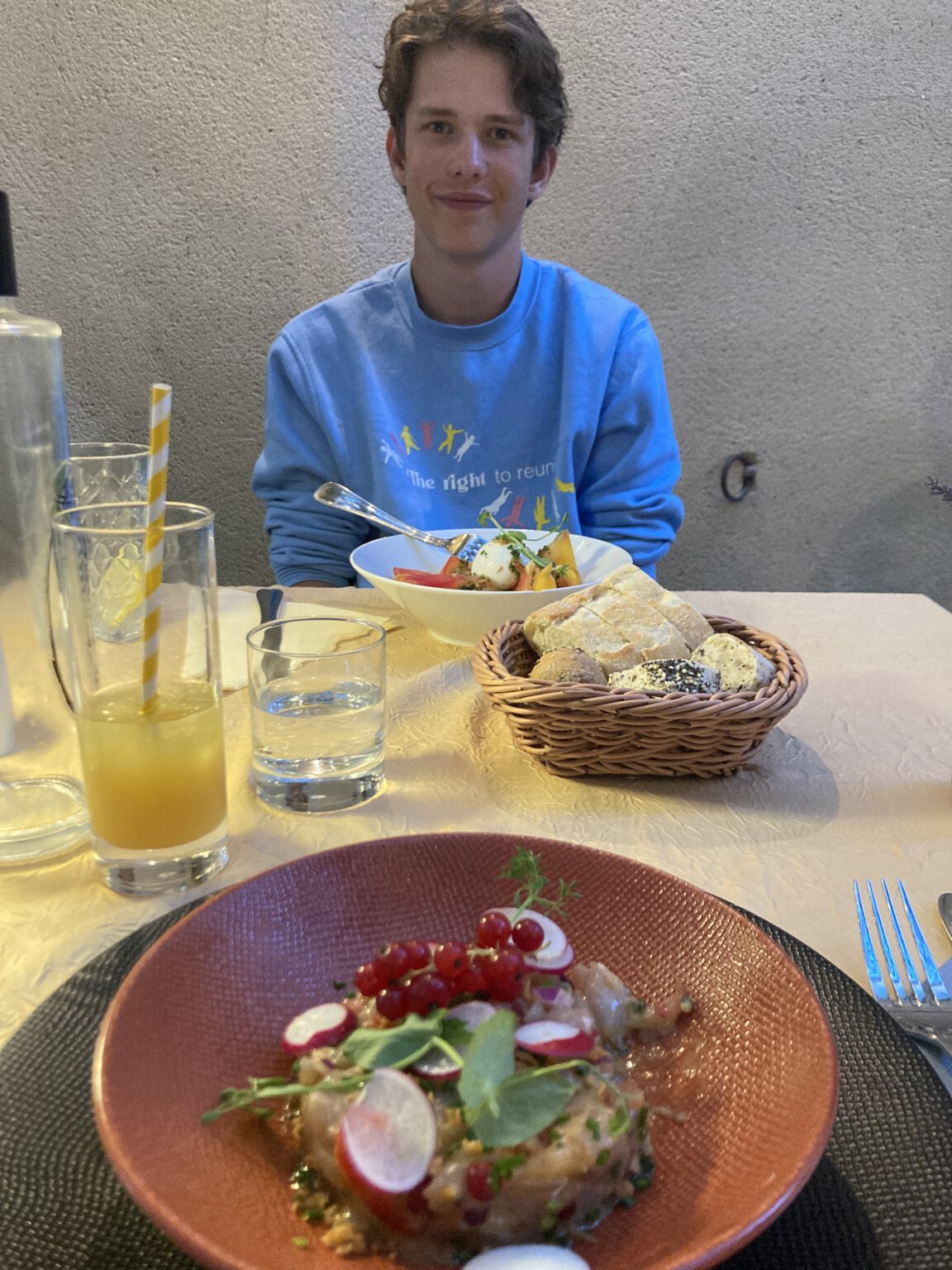
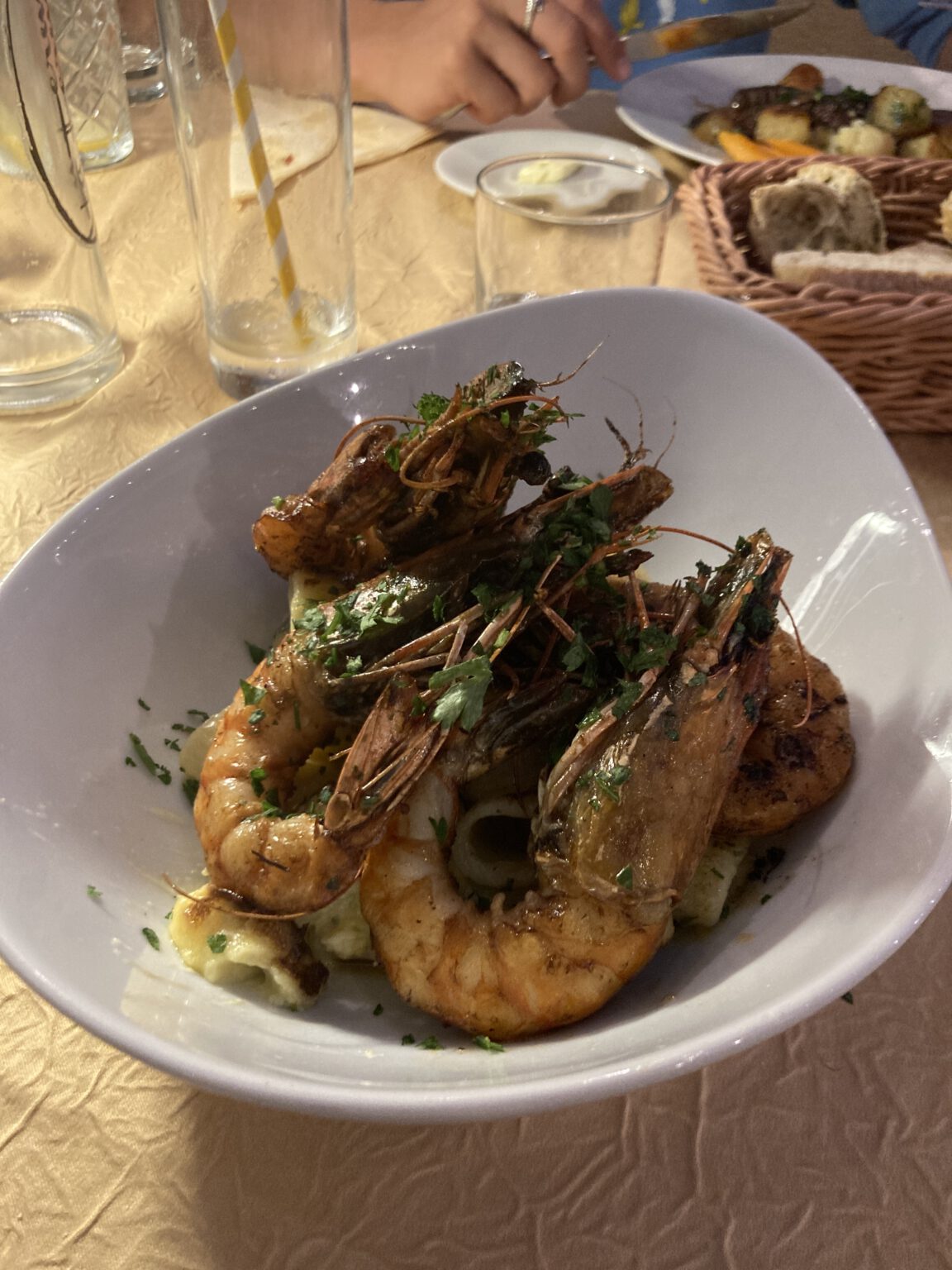
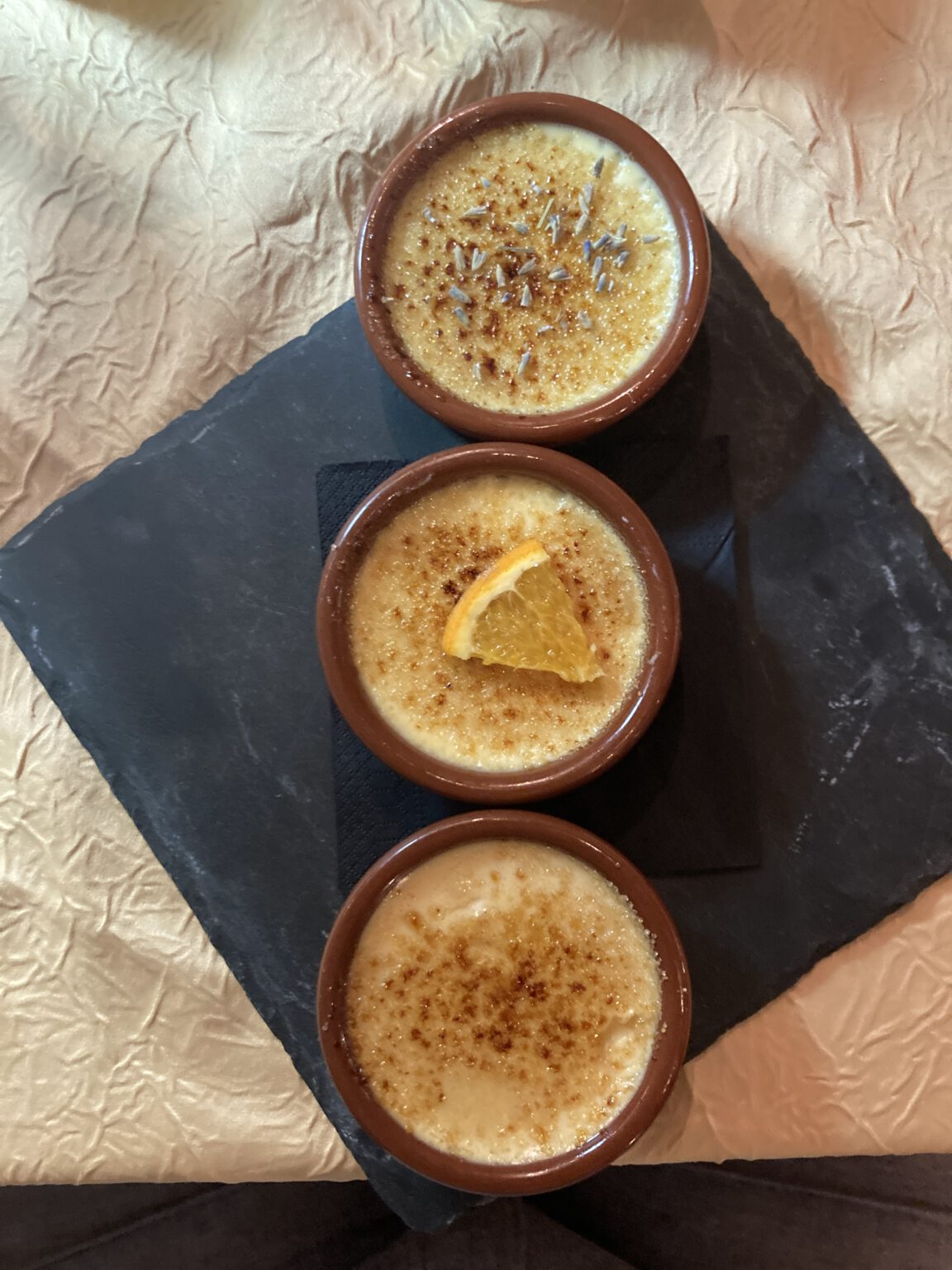
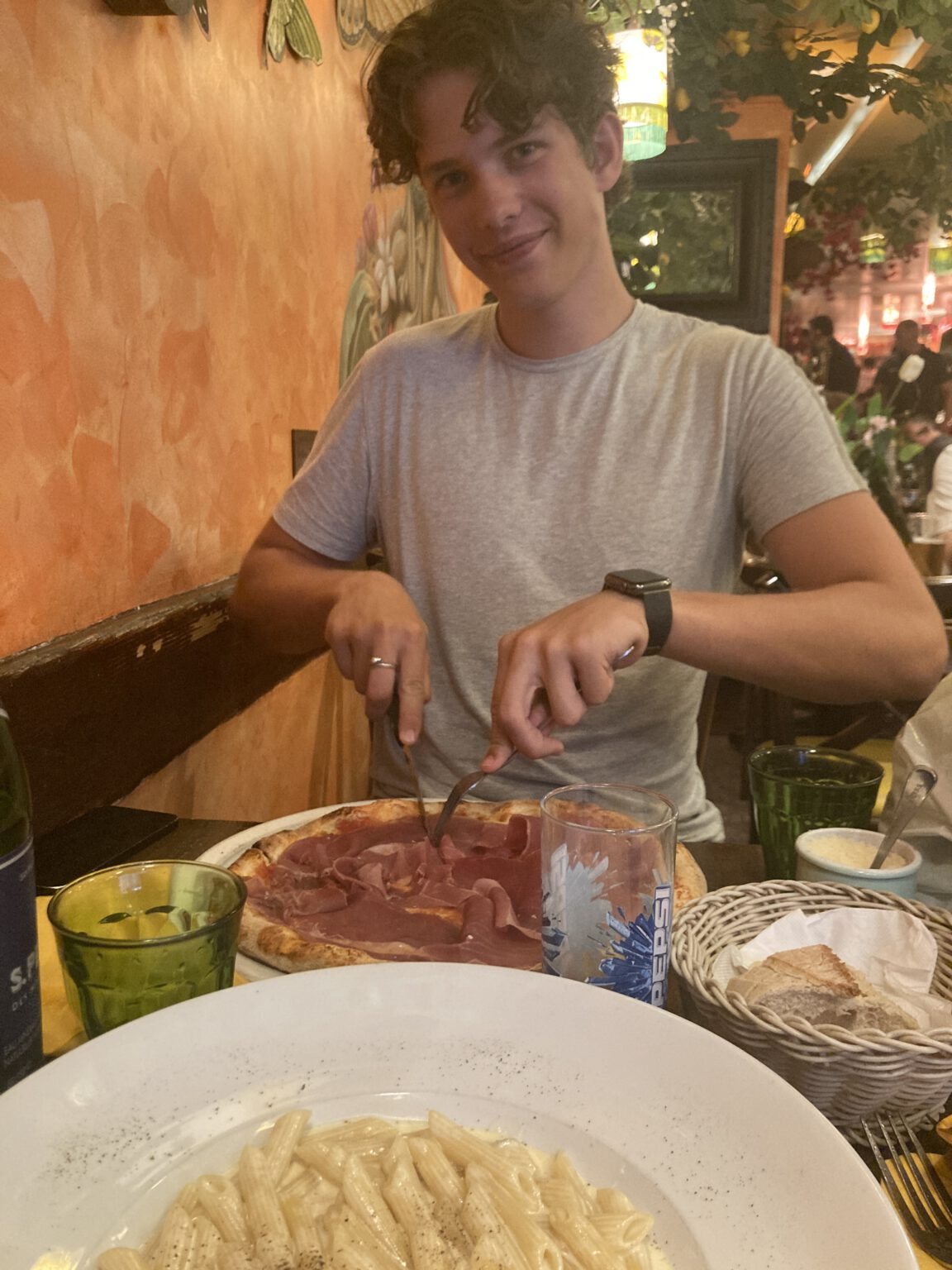
Before taking the metro up to Montmartre, we're lucky enough to get a free table near the entrance at a restaurant ranked number one on TripAdvisor. The atmosphere is great, the food good, but most surprising are the many police officers who gradually stream into the restaurant. At first we thought they were there because of some guest causing trouble or paying with a fake credit card. But when even 6–8 members of the Spanish Guardia Civil turn up, it becomes clear that this is the local haunt of the French police. We've never eaten anywhere quite so secure.
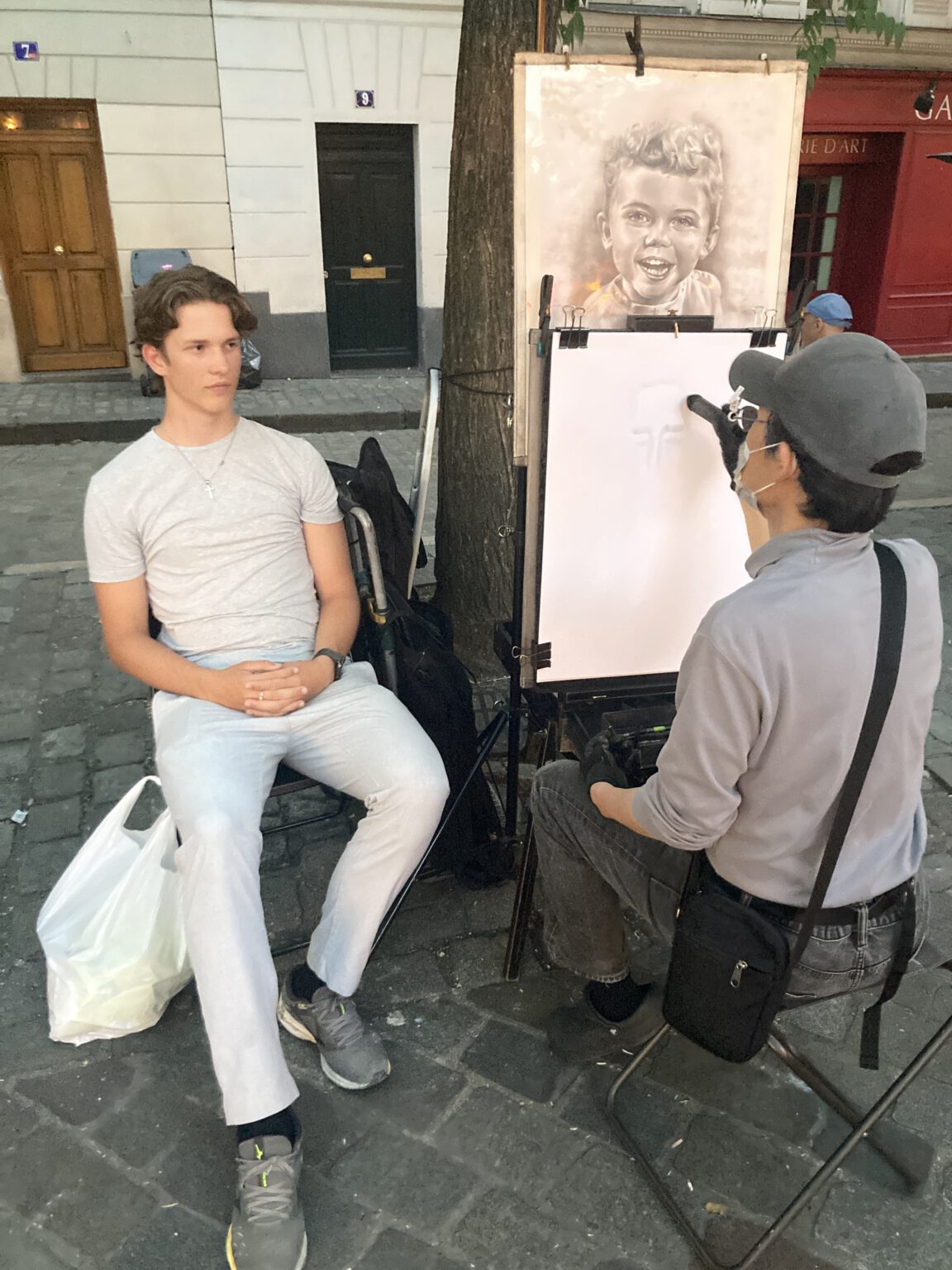
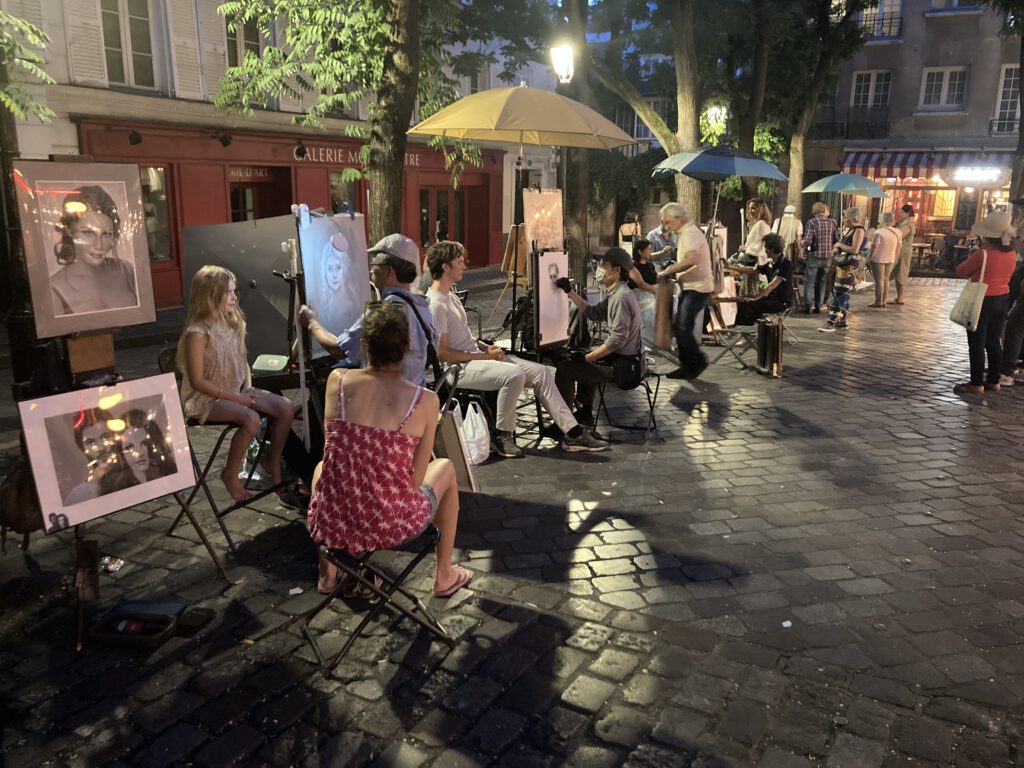
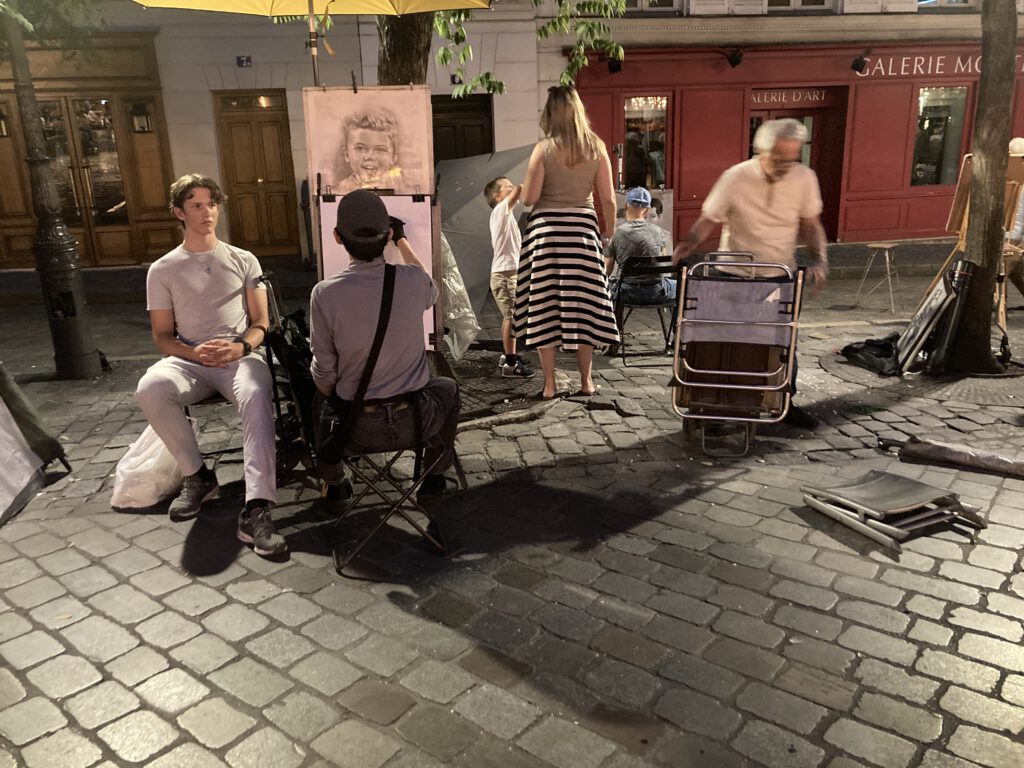
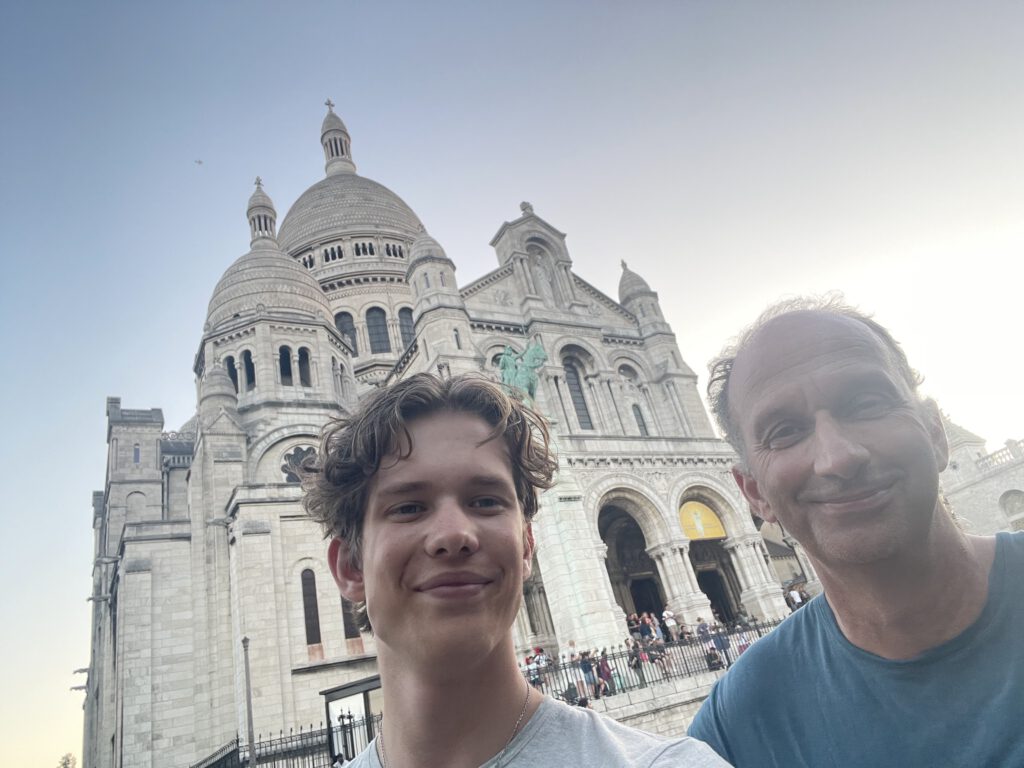
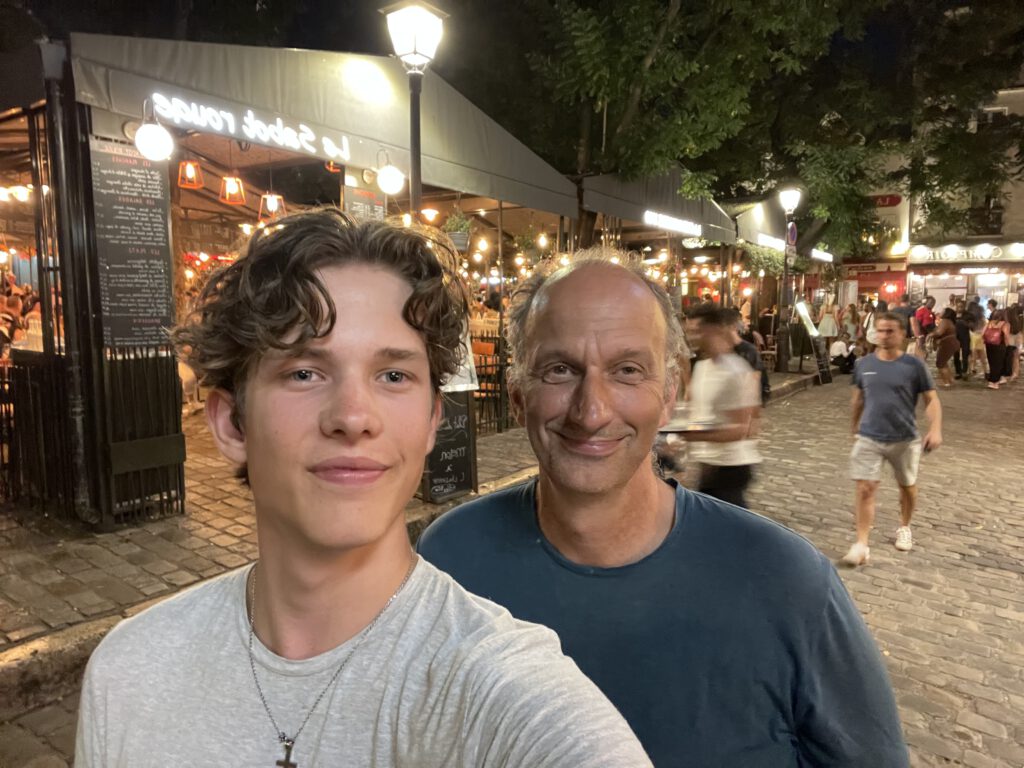
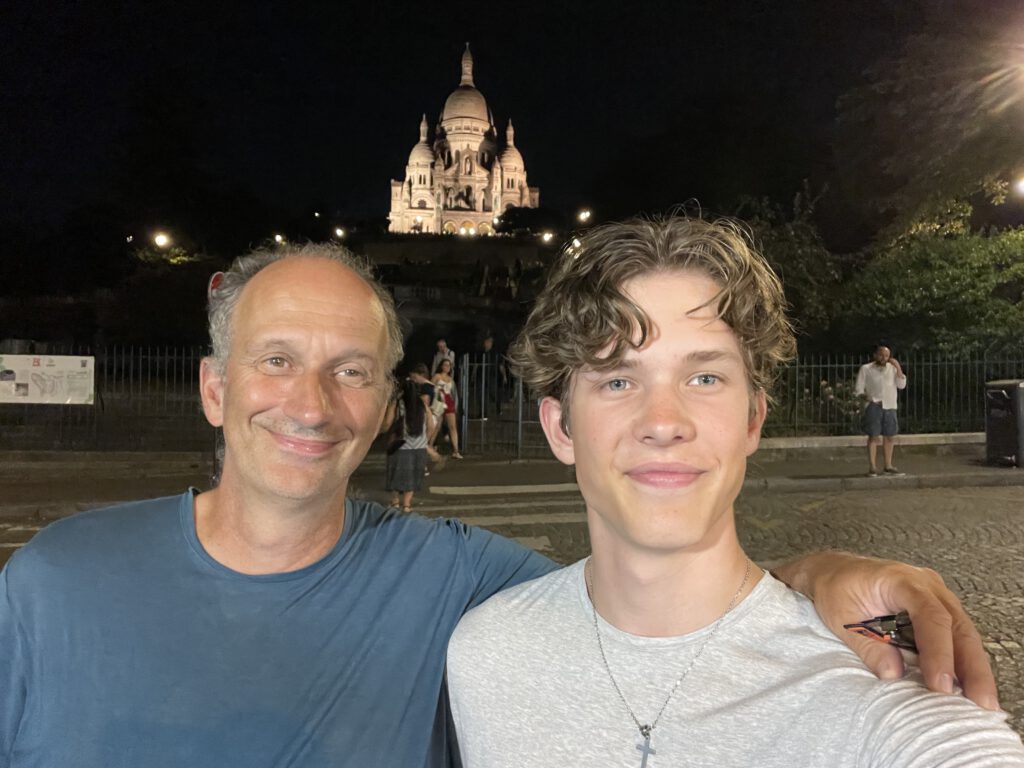
We arrive on Montmartre just in time to enjoy the setting sun. We only look at the Sacré-Cœur basilica from the outside, then wander on into the quarter where numerous street artists sketch portraits of willing passers-by, some more caricature-style, others very true to life. Mikkel is tempted but put off by the price. When a Japanese artist becomes free, and I'm willing to cover the cost (as a keepsake from the trip), he happily sits down.
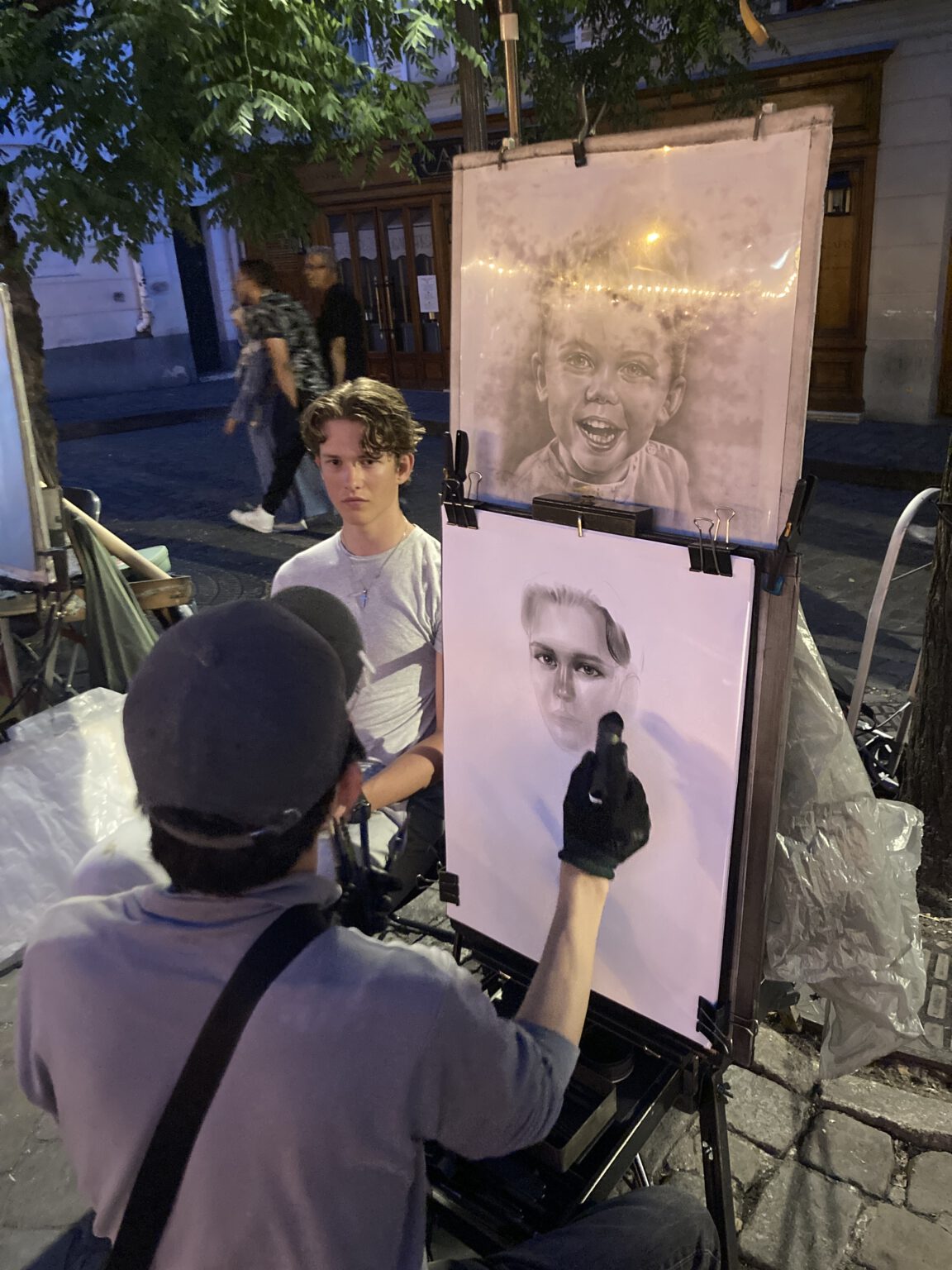
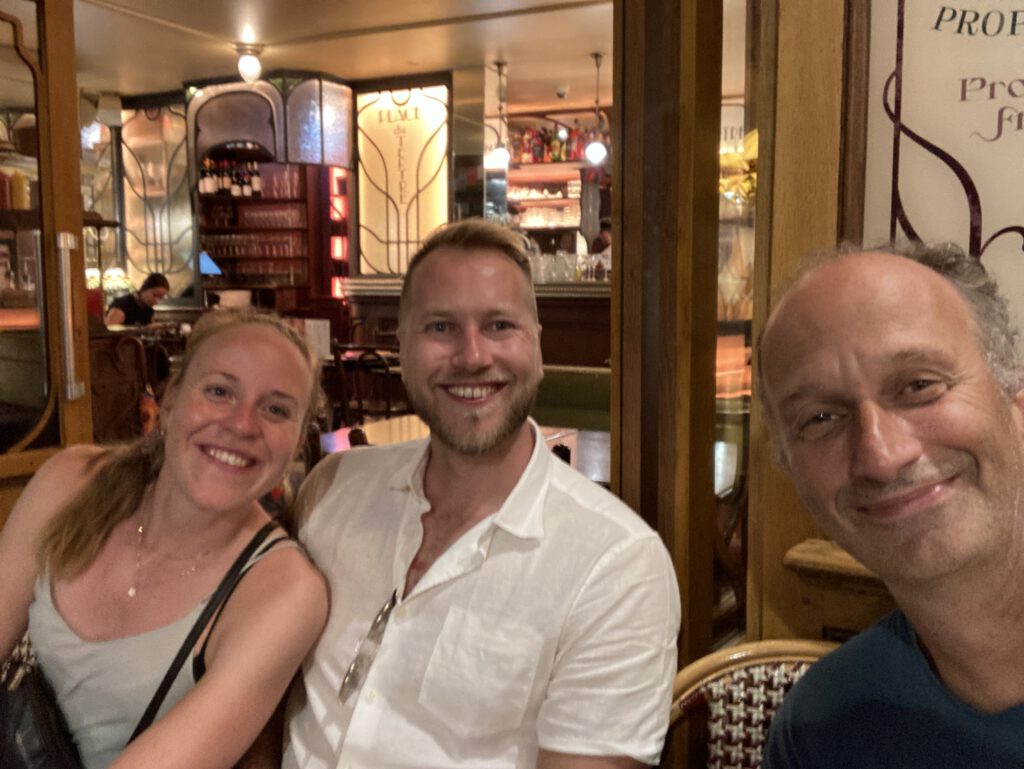
The Japanese artist gets straight to work, starting with a few lines and circles; Mikkel sits patiently and expectantly in his chair, and I take a few photos of the emerging portrait. It takes longer and longer, and I feel like sitting down myself too, so I drift into a nearby café, where I order a mocktail, if only to justify my presence there. Next to me sits a young couple, and when I hear them speaking Norwegian my curiosity is piqued and I ask where they're from. After a short chat it turns out she's the sister of Lotte Miller, who competed with Solveig on the Norwegian triathlon team this morning. It's a small world!
The artist is nearing the end of his work, and once he's finished, Mikkel joins us at the table before we head off towards the hotel, but not before listening for a few minutes to the street musicians playing on the steps down into the city.
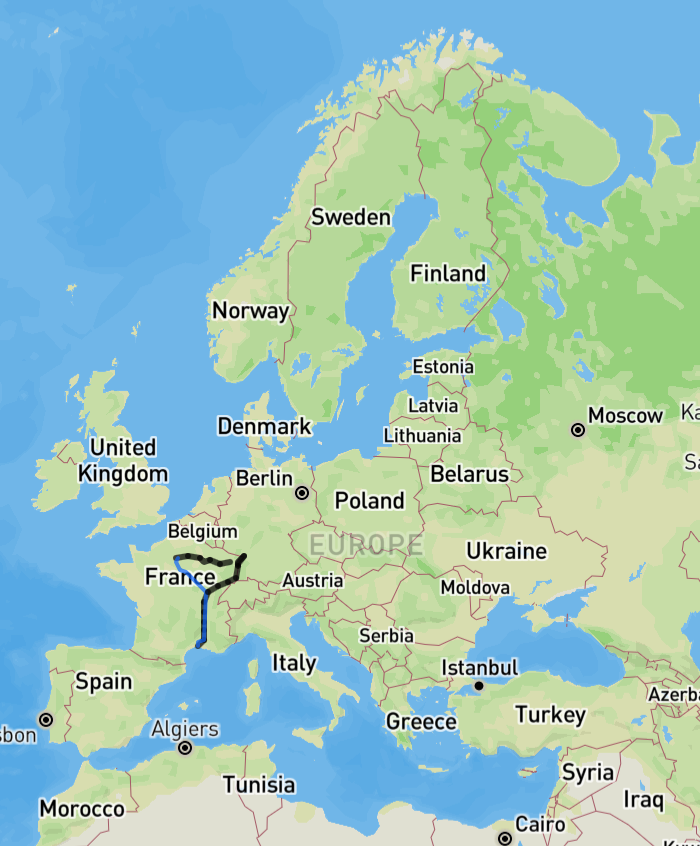
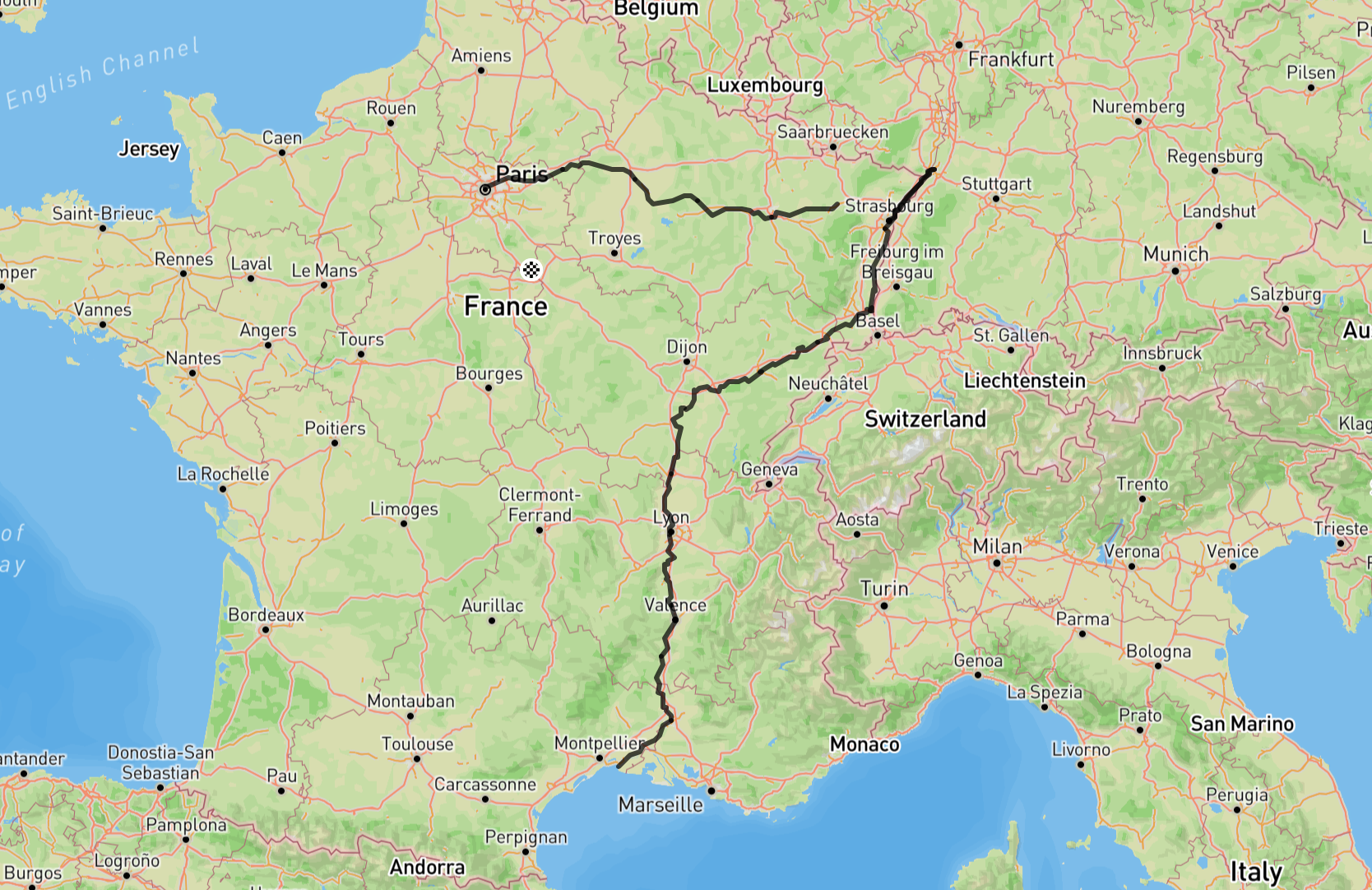
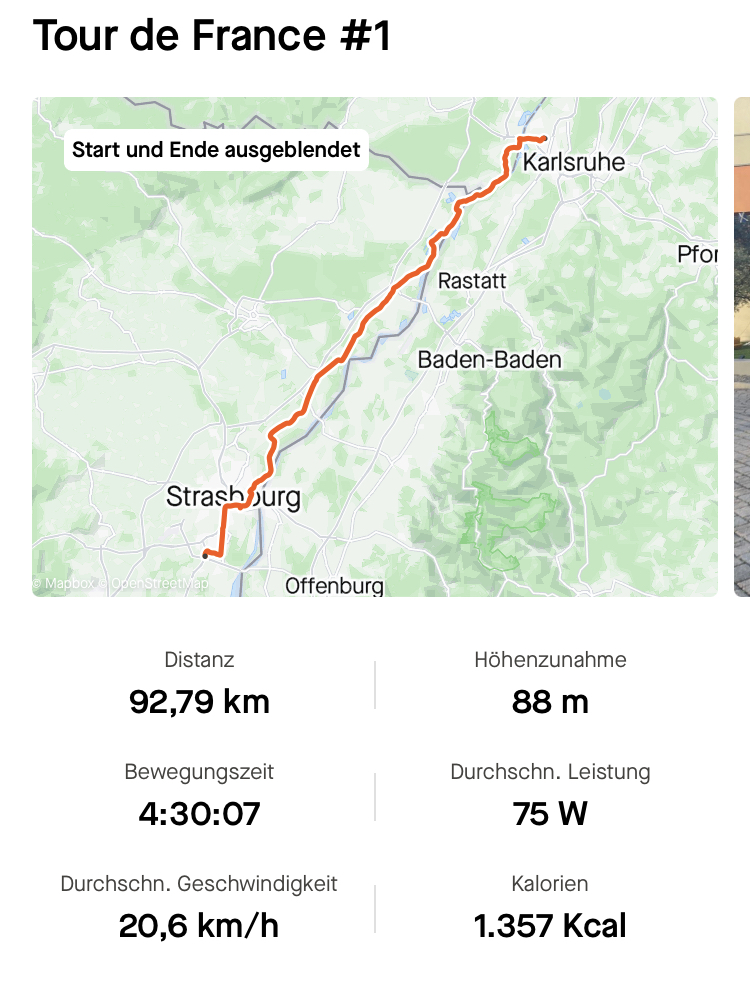
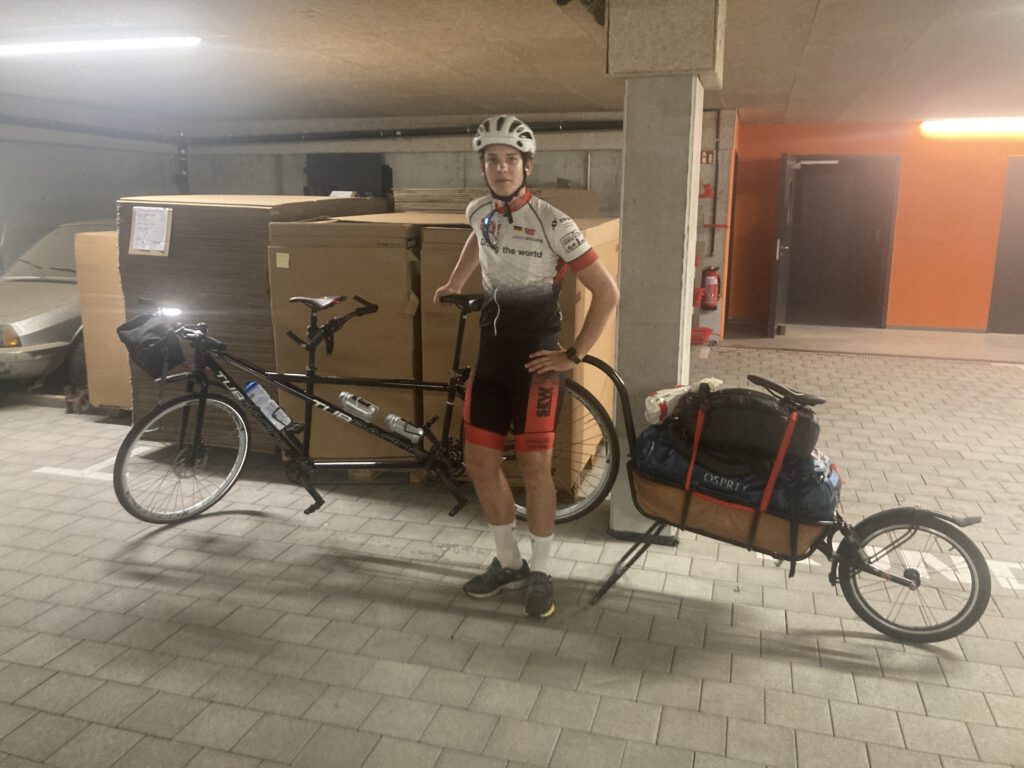
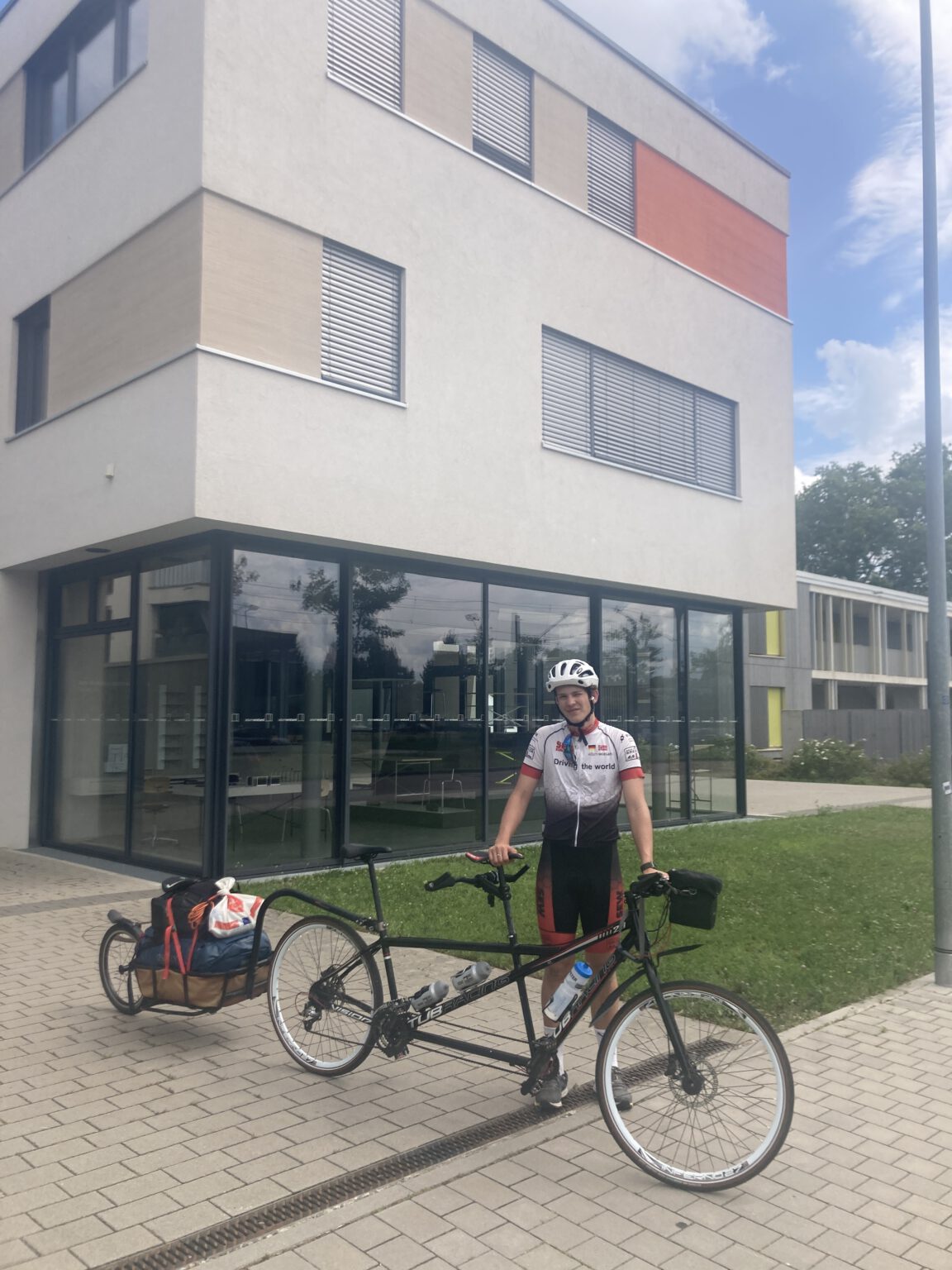
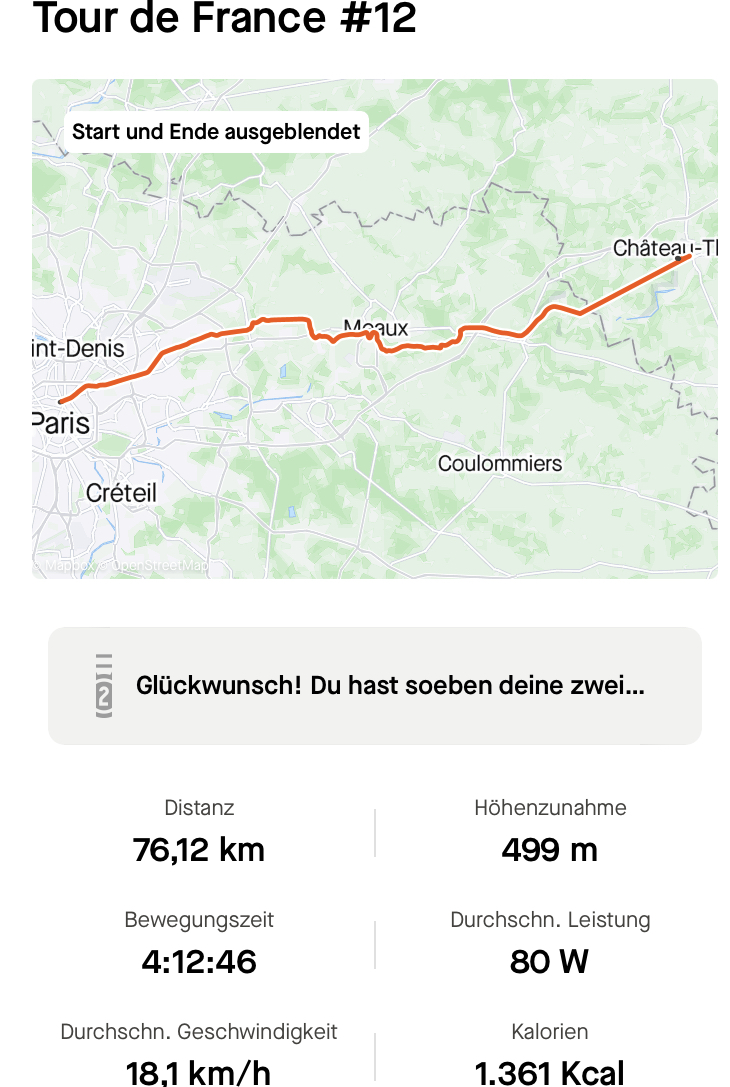
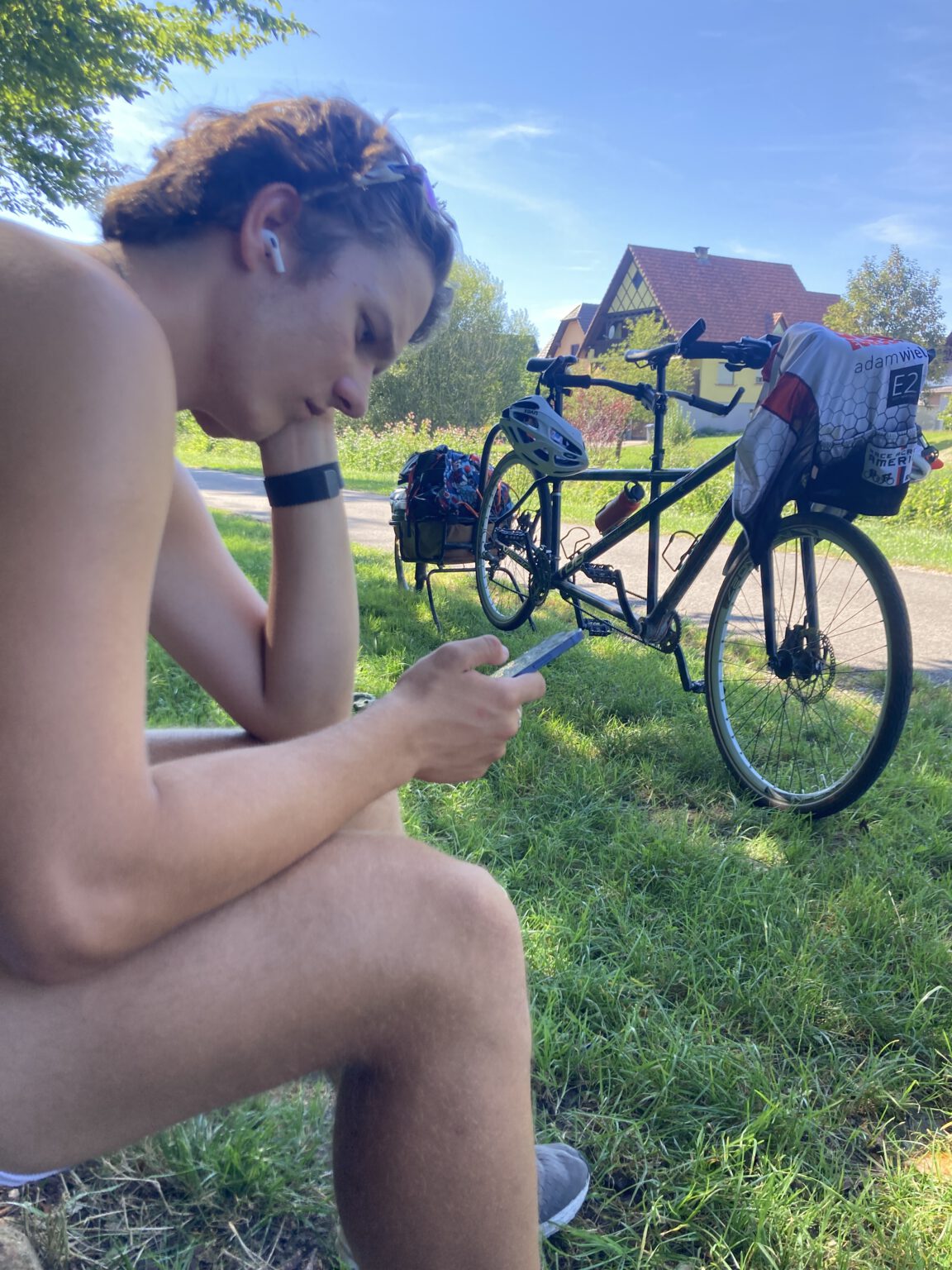
Back at the hotel it's off to bed, since tomorrow the rest days are over and we set off on the way back from Paris to Karlsruhe … by tandem!